
Surfboard Fin Setups Explained | Single, Twin, Thruster & 2+1 | Hand Laid Eggs
Single fin, twin fin, thruster or 2+1 - what does each surfboard fin setup actually do and which one is right for your board? A surf coach and shaper explains.
Written by Max Colvin.
Just when you are starting to understand surfboard shape, volume and length - you realise you know nothing about fins, their many options and sizes!
The same board can change with one, two or three fins and the size (and even position) of that set up.
As with all things surfboard design, there's a lot to unpack. In this guide we break it down simply, pitching the info at a beginner to intermediate level to help you understand what fins do and the difference they make to surfboard shapes.
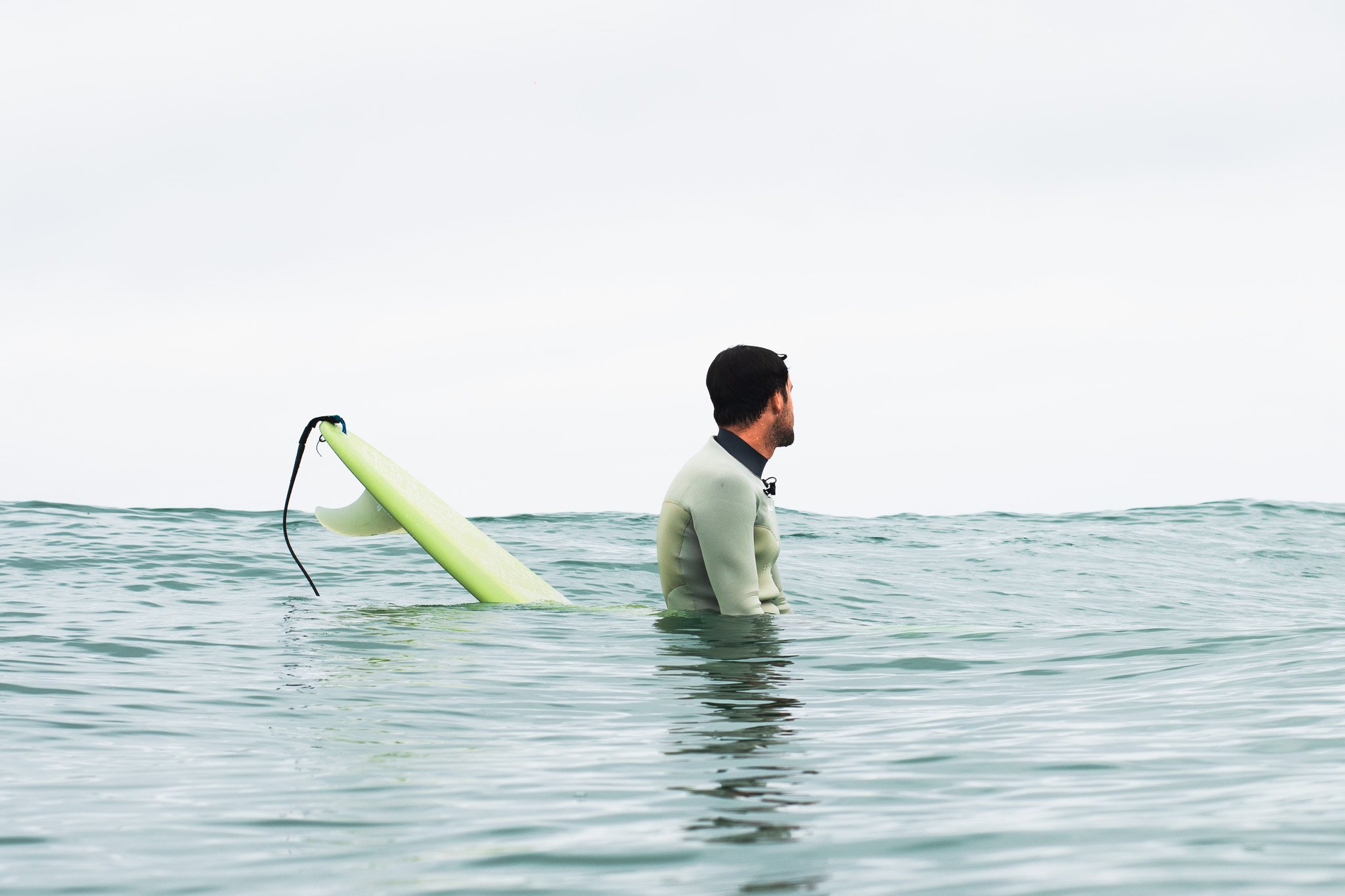
Why Fins Matter - How They Work
Without fins, you lack stability and grip on the wave - which can also be thought of as ‘hold’ or actually ‘speed’ or ‘lift’.
Stability
Without fins, imagine yourself spinning uncontrollably on the board as it’s flat on the wave. When you are moving across a wave, any protruding fin in the water will stop the board sliding sideways and make the board more stable.
The more fin(s) in the water, the more stable the board. Think about your back wheel on a bicycle, then add your stabilisers.
The fin in the water also acts as a point to pivot around, somewhat anchoring you into a turn without the back of the board slipping out.
Grip/Hold
If you look at the side profile of fins, you will see that they are shaped a bit like aeroplane wings. In particular, side fins are flat on one side and curved on the other.
More easing to imagine with the side fins alone - picture them holding you into the side of a wave which then (due to the physics of the way a wave moves) provides you with more grip, which equates to speed down the line.
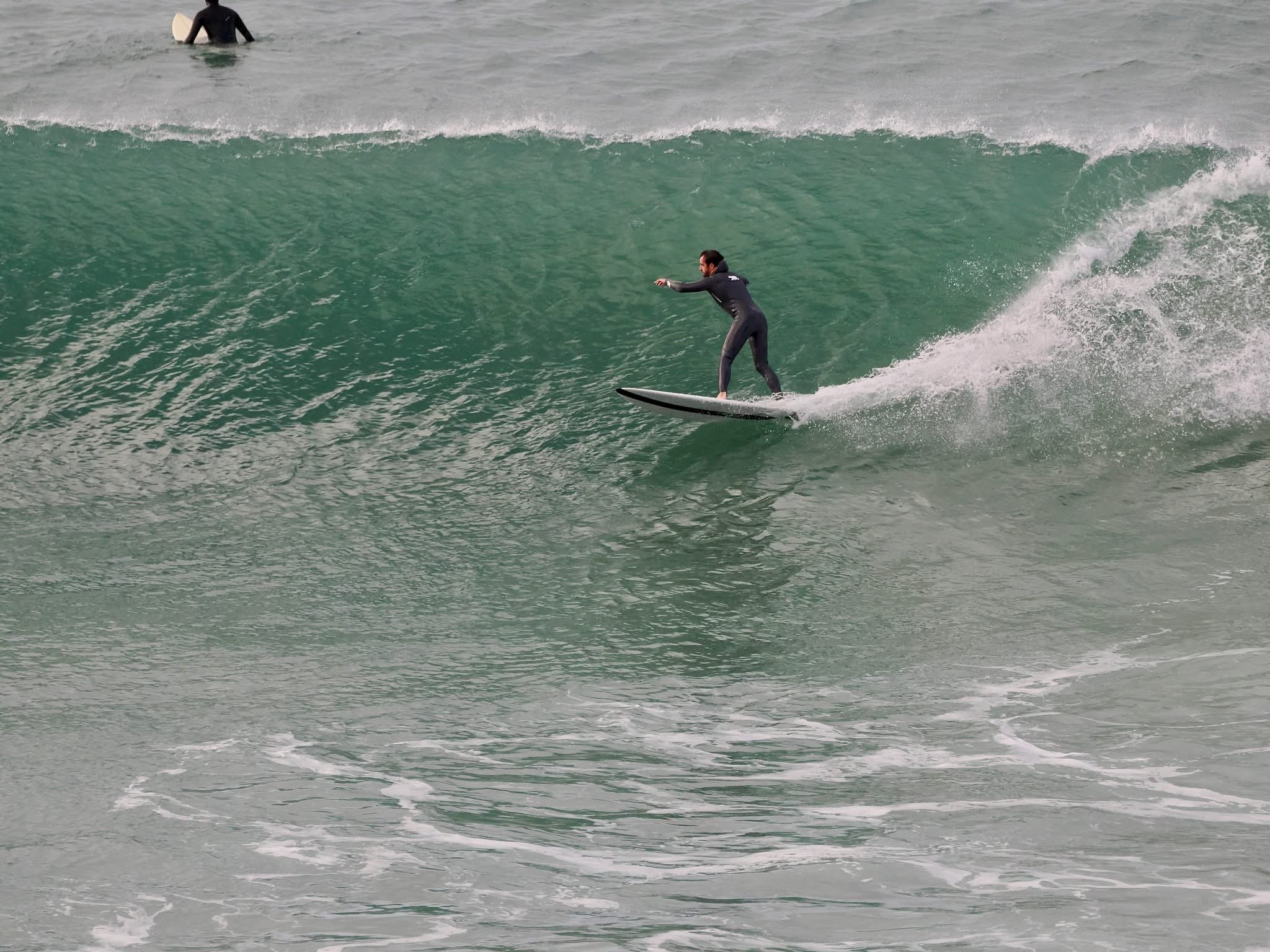
Using the speed and hold of a twin fin to chase a closeout section
Types of Fin Set Up
Single Fin
The original surfboard set up, once we realised we could stick fins onto wooden boards in 1935.
What is it:
A large fin placed in the center line of a board, usually with the fin insert box usually placed approximately 4 to 6 inches from the tail of the board.
What does it feel like:
Fast and ‘flow’ like down the line, with loose and pivoty turns.
Single fins are usually featured on boards with long rail lines - longboards and bigger mid lengths or minimals. The rail engages in the wave face and provides a lot of the grip needed, so a single pivot point at the back makes these boards easier to turn.
The lack of side fins means less drag in the water so the boards have a looser and faster feeling, especially on smaller slower waves.
Larger center fins can allow the board to lock into the wave whilst you move forwards towards the nose, although it’s still possible to nose rider other fin set ups, single fins are the best for doing this.
The fin size and positioning makes a huge difference. As an average weighted person, you need an inch for every foot on your board as a minimum - so a 7ft board needs a minimum 7 inch single fin.
The position on the box will also affect how the board feels, further back will provide more hold and speed, further forward will be slower but easier to pivot.
Pros/good for:
Big, long rail line boards
Small clean waves
Cross stepping + nose riding
Feeling like you are in the golden age of surfing
Cons/not as good for:
Stability unless the board is providing you with that (wide/long boards)
Choppy, bumpy or unpredictable conditions
Small boards with short rail lines or aggressive outlines
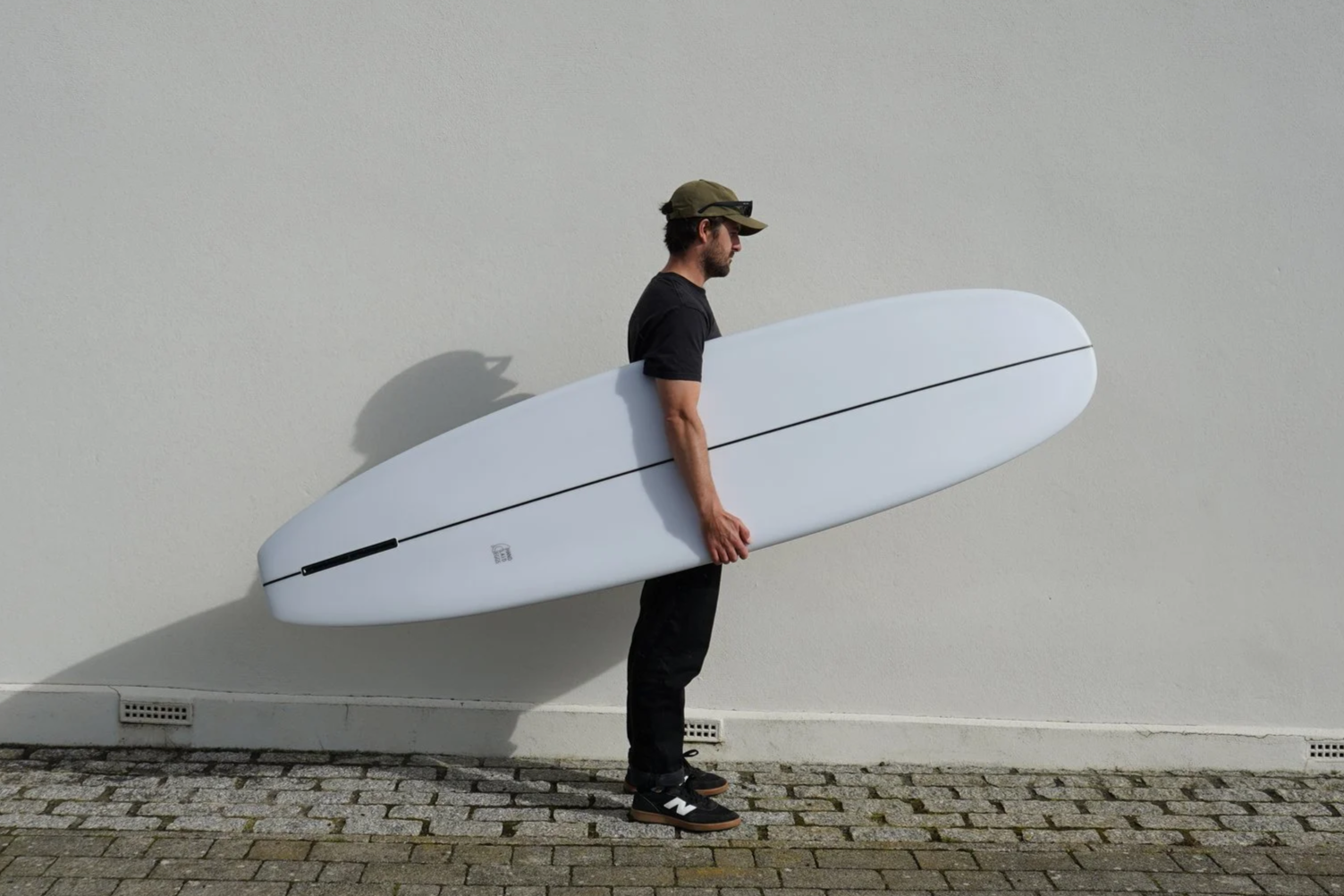
Our mini nose rider surfboard with a single fin insert
2 + 1 - Single Fin and Side Fins (aka side bites)
The addition of two smaller side bites came around in the 1970s.
What is it:
This is a three fin set up, using the same single fin box and fin as used above, adding two small side fins near to the rail of the board. The middle fin is sized smaller when using the sides.
What does it feel like:
Similar fast and flow-like feel of a single fin but with more draw out turns and stability in comparison.
The side fins provide the (sideways) grip which translates into a less wobbly, more stable ride when tipping the rail into turns or trimming across the wave.
Extra fins in the water will stop the board slipping but you may feel slower on small clean days where there isn’t much power in the wave.
The extra grip and the pivot points being further forward, mean the turns are more controlled, with a bigger arc in turns made.
As well as the middle fin being sized smaller than if it was alone in the set up, the side fins are sized smaller than when using a Thruster set up.
A cheeky bonus of these set ups is you can ride them only as a single, providing you use a larger center fin and don’t just take the side bites out - this would be too loose.
Pros/good for:
Good in a range of conditions
Good compromised speed and stability
Drawn out turns
Still feeling like you are soul surfing in the 70s
Cons/not as good for:
Thruster has more control and the ability to turn tighter/in more powerful parts of the wave
Not as fast and loose as a single fin
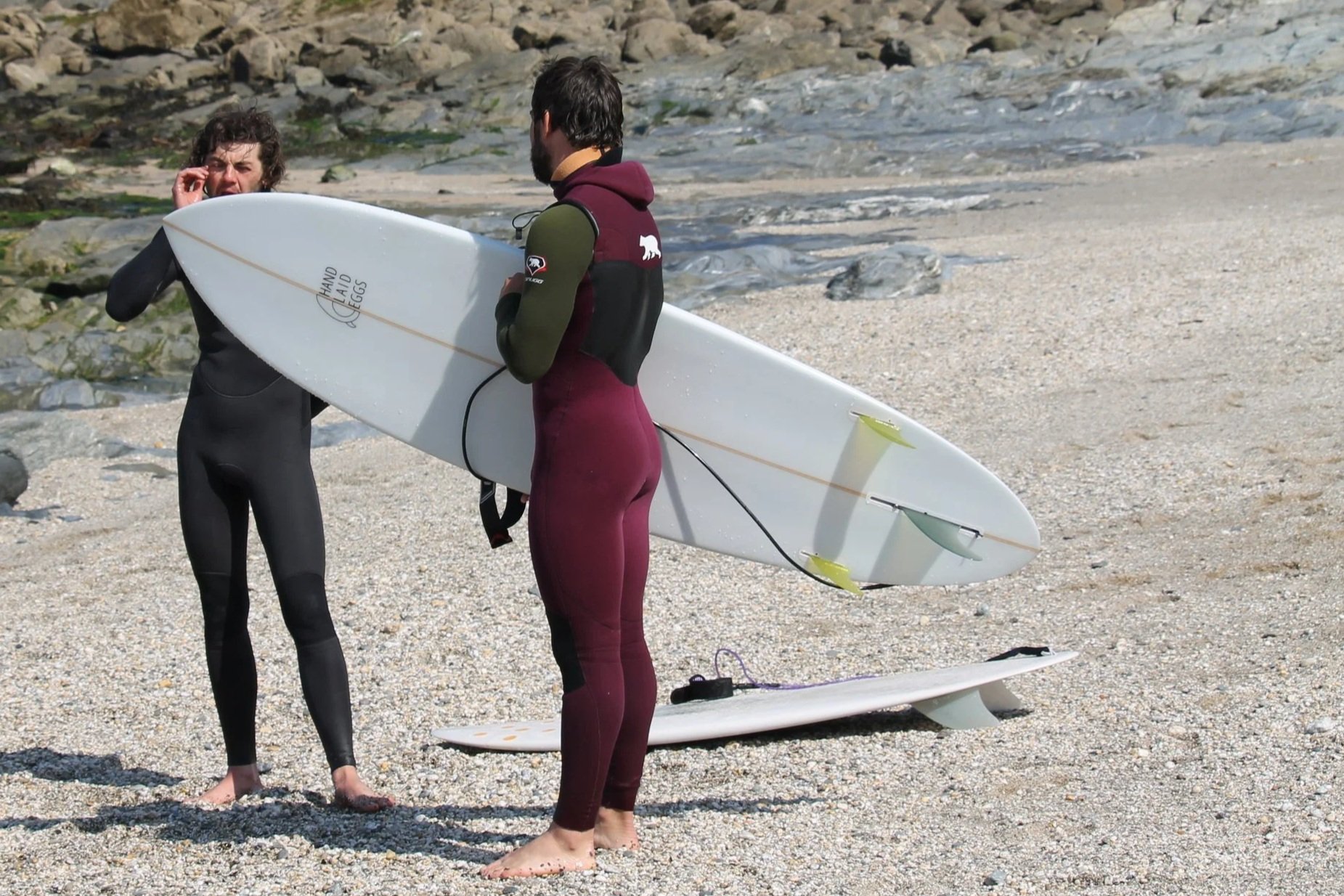
2 + 1 is a a perfect fit on our Royale mid length
Thruster
Regarded as a turning point in performance surfing, 1980s was the year Thruster set ups were ‘invented’.
What is it:
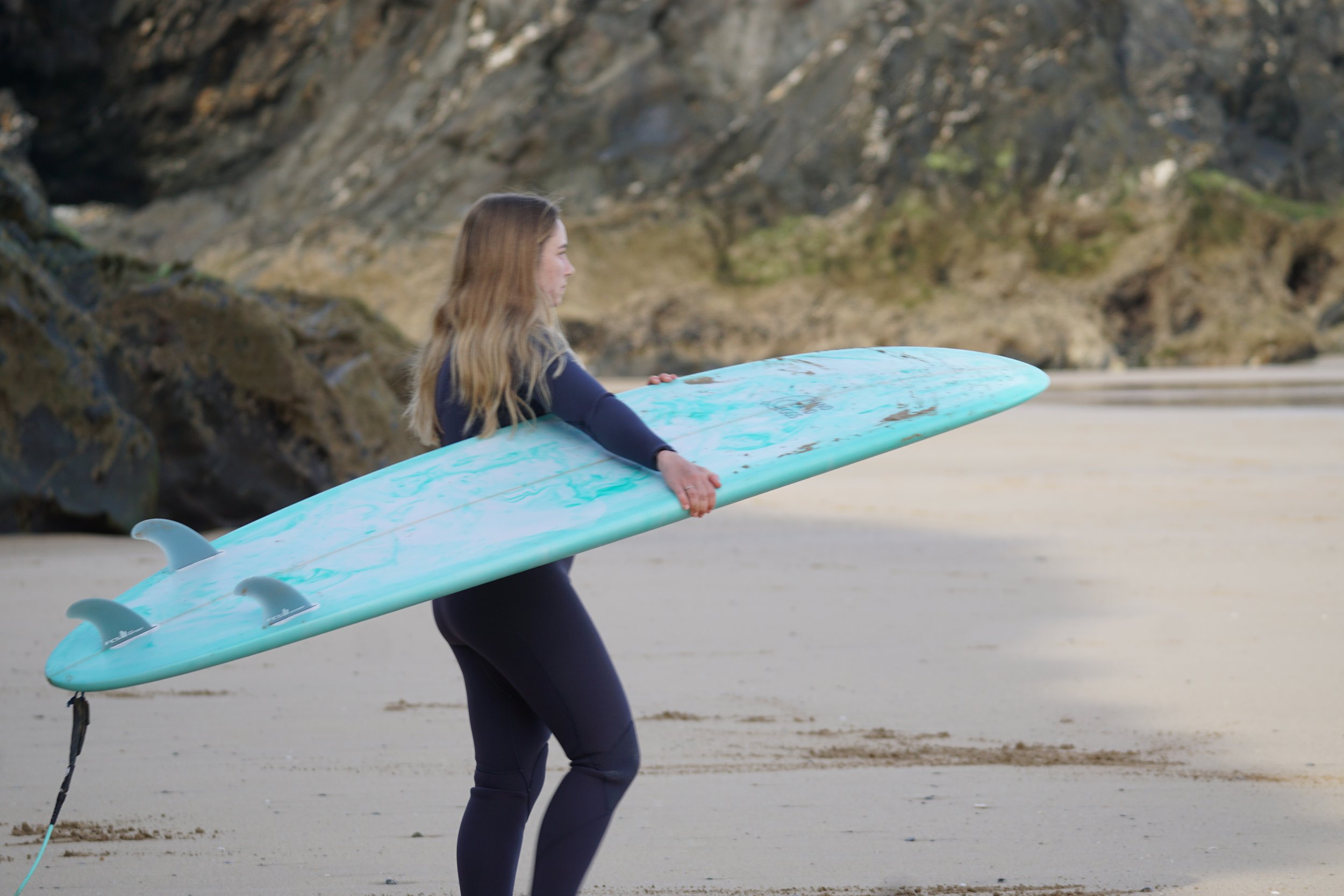
Three identically sized fins, placed further back on a board than 2 + 1 set ups. Although the shape and size are the same, the middle fin is ‘foiled’ evenly and the side fins are flat on the inside and curved on the outside. Generally available in three sizes, small to large depending on surfers weight/height.
What does it feel like:
A balance between every fin set up, considered the best all round for speed and stability.
Think center fin stability and pivot, combined with side fin hold. In comparison to the other three fin set up of a two plus one, the smaller center fin allows the board to release easier in turns - this means the arc of the turn can be smaller when you push harder onto the fin or into the turn.
With set positions for the inserts and only three sizes, improver surfers are less likely to get the size and position of the fin wrong, in comparison to a single fin or 2 + 1 set up. They are also easier to put in and all round a less expensive set up.
Pros/good for:
Pretty much anything
Balance of stability, speed and hold
Tighter turns with the ability to go more vertical
Can’t go wrong with size and position
Cons/not as good for:
Speed and looseness in small waves
Cross stepping and nose riding
Having a range of options
Twin Fins
Another warchild of the 70s which still has its main stay in hipster surfing culture.
What is it:
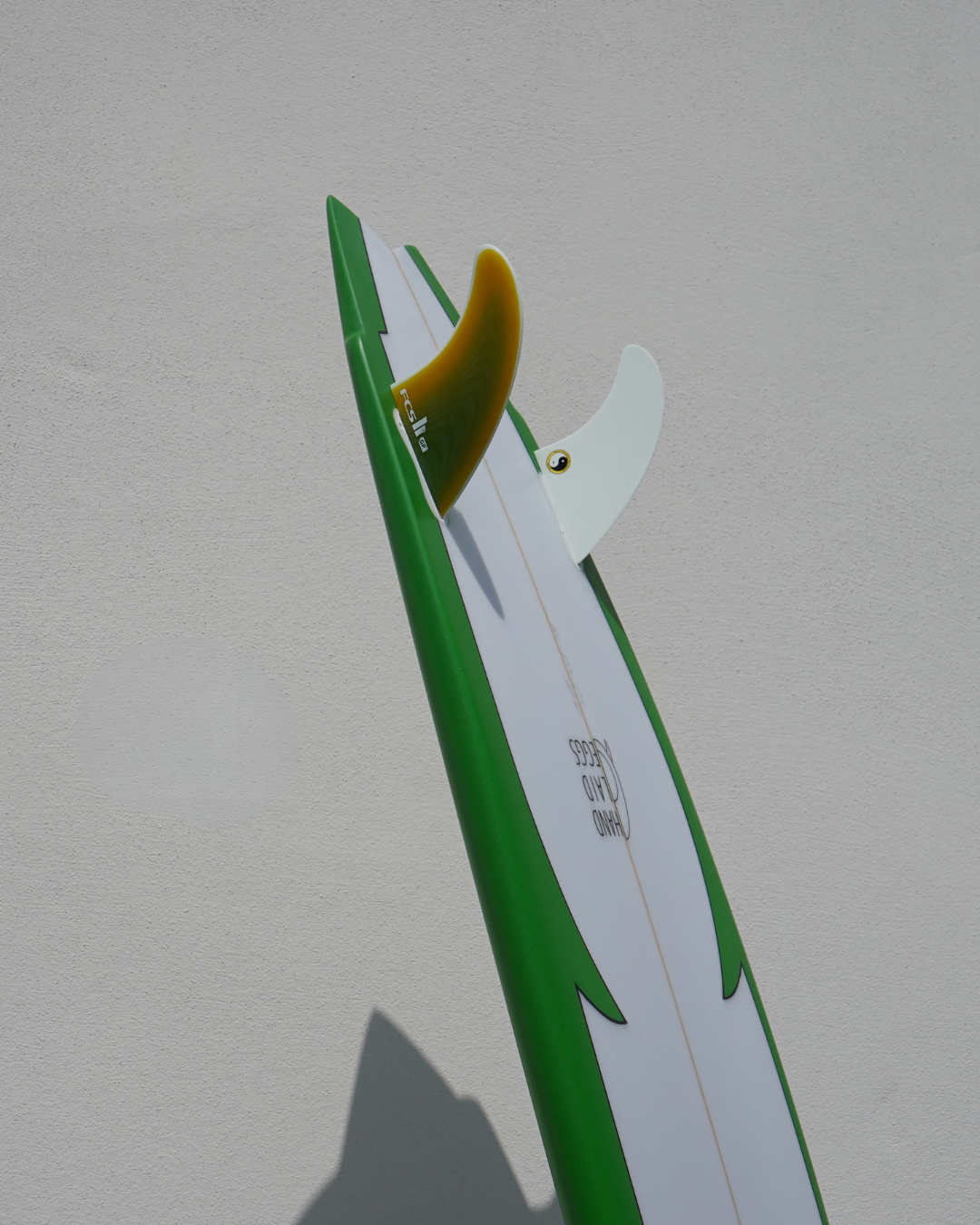
Two fins, larger in length and width than the sides of a Thruster set up. The positions are normally further back than Thrusters.
What does it feel like:
Fast, loose and skatey. The lack of middle fin equates to a very noticeable increase in speed and a loose feeling under the back foot.
The larger fin also provides a big engagement into the wave faces, meaning you can hold a higher line and benefit from the speed of the wave.
Turns are much tighter as you are only pivoting around one fin that is placed right next to the rail of the board.
The increase in speed and lack of control can be unwelcomed, you need to adjust your surfing stance to be less heavy on the back foot during turns and when pumping.
Riding the right type of twin fin made for the board is essential. In addition, putting twin fins in the sides of Thrusters or 2 + 1 set ups is not recommended - the forward positions of these set ups may mean the board will be too loose for the size of twin fin use.
Pros/good for:
Advanced surfers looking for some excitement/a different feeling
Small/mushy waves - depending on the board shape!
Instant speed down the line
Tight turns
Cons/not as good for:
Lower level surfers who need control over speed
Powerful, fast hollow waves where you need control over speed
Having to adjust your stance every time you switch between boards/fin set ups
Other Fin Set Ups
As this is a beginner to intermediate guide, we are not going into detail about the ones we don’t feature on our boards. Surfing and understanding board design is hard enough already. One to three fins is the majority of what people surf and there’s no need to complicate it anymore.
Not featured set ups include:
Twin plus trailer - Twin with a tiny middle fin, not against these but they don’t need a whole section, it’s just a twin with a bit more stability.
Quads - An acquired taste that you need to match up with board design and usage. Also one extra fin to buy, loose or break.
Twinzer - Essentially a quad with two tiny front fins. Same as above but more hipster.
Which fin set up is right for your board?
You need to match the type of surfer you are, to the board, to the conditions.
Luckily we’ve done that for you - our models are split into the ability of surfers and the waves/style they are ridden in.
Our Sunny Side Up model is a minimal/egg which makes a perfect first hardboard or small wave cruiser. This board is a thruster set up, making it a great balance and not over complicating or allowing for mistakes when choosing fin size or positioning.
With lower level surfers currently less invested in the sport, the inexpensive Thruster set we recommend from FCS is robust and makes an affordable package when added to the board.
The Scrambled is a high volume, budding improver and intermediate mid length we make, for improving turns and pushing yourself to get out in more punchy conditions. For this, we use a Thruster so the turns can be tightened up and you’ve got great hold in steeper wave faces.
For small to medium waves, anything from improver to advanced surfer, our Poached model is a mini longboard/midlength cross over that feels more mid length when sized below 7ft.
Often ridden in a variety of styles, some people cross stepping it, others riding it like a shortboard off the tail - the fin set up reflects that. A 2 + 1 allows you to ride it fast and flowy as a single or with the sides for stability in bigger waves.
The longer rail line of the Royale combined with the classic mid length feel, makes it surf all conditions well as a 2 +1. Also incredible fun as a twin fin, the rounded twin pin style tail sits in the wave face and provides some stability in bigger waves.
For single fins, our small wave longboards and mini logs go perfectly with larger center only fins. With side bites only on special request for the Egg Log, it’s best suited for small waves, using the larger center fin to lock the tail into the wave whilst you cross step and shuffle to the nose and back.
Twin fins are naturally suited to fish surfboards, the flatter rocker suits the UKs often small mushy waves well, and the lack of center fin gives you the speed you crave. Twin pins are fast and skatey but not as loose as fish boards- this makes them a really fun alternative to shortboards for advanced surfers.
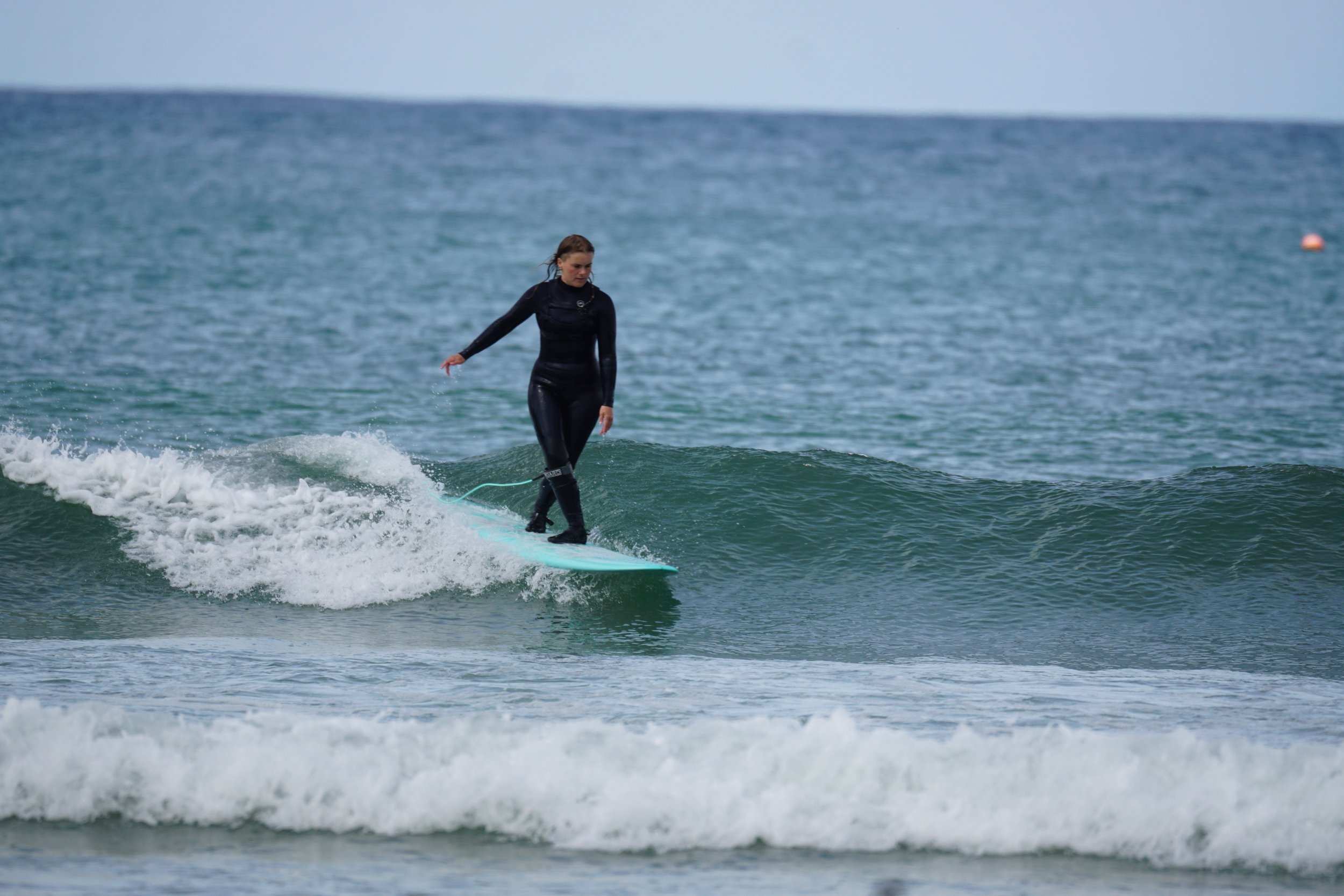
Gather and Glide showing it’s still possible to cross step a 7’4 Minimal with a thruster set up
FCS vs Futures
Single fins are universal, there is only one insert and base of the fin. Side fins and Thrusters are either made by the companies FCS or Futures. Without going into huge detail of the pros and cons, simply put you can’t swap them over - you need the compatible fin to match the insert.
We make all our boards with FCS inserts unless Futures are specifically requested. We have a deal with FCS and can provide the perfect fins for our custom orders, discounted from standard shop price.
We’ve experimented with fins so you don’t have to
Matching up the waves, surfers and styles of board - we’ve done the hard work and figured out what works. As with all our boards, size, shape and fin inserts are customisable. Speak to us with your thoughts and feelings and we can provide expert advice, translating it into a board that works.