
Types of Foam Surfboard - Which Foamie Should You Get?
By Surf Coach and Hand Laid Eggs Board Shaper And Designer | Max
Fresh out of your first surf school lessons, desperate to know which foamie is right for you?!
In this blog we run through the types of foam surfboard, from budget soft tops and surf school boards through to performance foamies and hybrid surfboards, to help you decide which soft top surfboard is right for you.
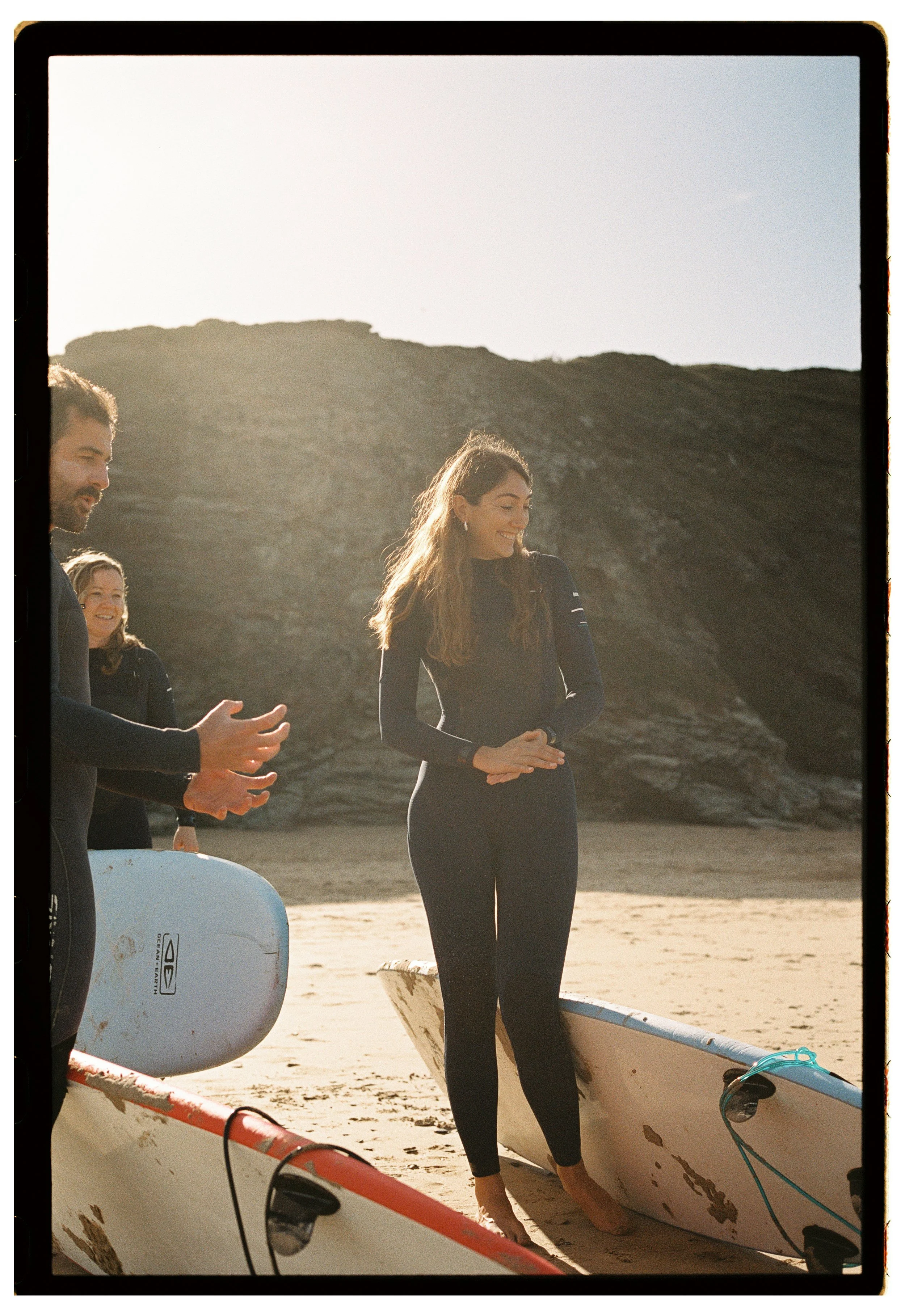
Surf Coach and shaper Max, on an improver lesson at Watergate Bay
What is a Foam surfboard?
Foamies have come on a lot in the past few years, but the core idea is the same - a soft and robust board where the priority is on the surfers safety rather than performance.
Materials
Put simply, foamies (also known as soft top surfboards) are built like this: foam core, tough outer skin and soft plastic fins.
To get more technical on the materials, the core is expanded polystyrene (aka EPS, like what your TV comes packaged in) wrapped with a layer of PE (polyethylene) plastic.
Shape, size and fins
With large round shapes, often a square or wide ‘squash’ tail, foamies are usually around 8ft in length.
The thickness goes from 22 inches wide up to 27 inches, and they don’t usually drop below 3 inches thick, reaching up 3 ¾ at their thickness point!
The large round shapes, length, thickness, width and the fact the rails are very boxy means they pack a lot of volume.
Volume is often the focal point for surfers at this stage, with many translating volume as ‘how much it will float me’, although it’s important to start to understand other factors of the board, not just this digit.
The fins on foamies are almost always plastic, usually VERY soft and flexible. The more ‘performance’ foamies will feature inserts for hard fins - more of this explained later.
Finally the rockers are very flat in comparison to the majority of hardboards like minimals and mid lengths. This is great for building up paddle speed catching small waves but hinders you in steeper take offs and turns.
Types of foam surfboards - Which one is right for you?
Surf School/Hire boards
The cheapest and most robust foamies, these are designed to take a beating. The widths are large and the shapes of these boards are very square.
Any round curves in shape outline or pulled in refined rails are hard to wrap in plastic - these boards aren’t very good for turning but will be bullet proof, stable on slow white water and small green waves.
Examples:
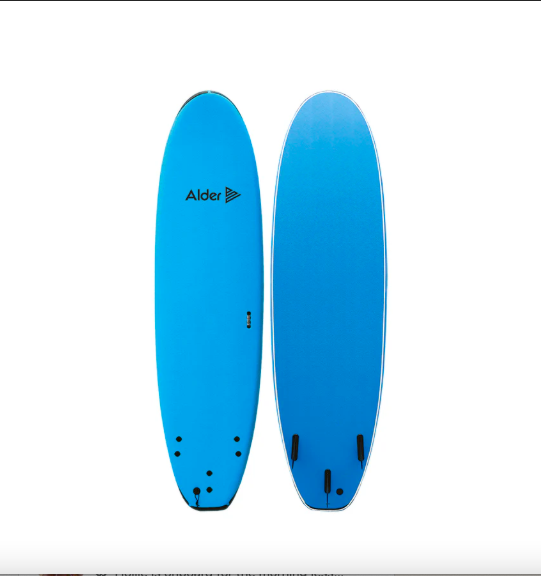
Alder Glide
8ft - Approx 25inch width (not stated) 100L volume
An extremely robust board which does make it slightly heavier. It’s very wide and the tail is quite large and squared off, an incredibly stable board due to these features, the negative of this being it’s harder to turn. Lacking a stiffer slick plastic bottom, these boards feel flexible in anything other than tiny waves.
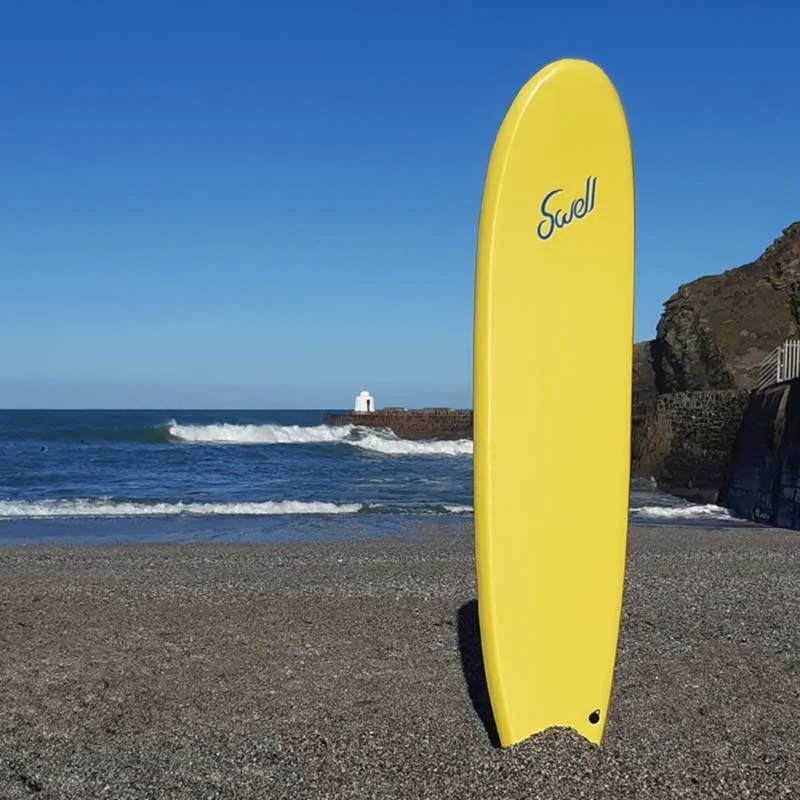
Swell Model 800 (aka Swelly)
8ft - width or volume not stated online
The Swell is a classic, one of the OG beginner foam surfboards from the UK. The foam core is wrapped in a very soft outer layer. Out of any of the boards featured in this blog, if it came down to it - this is the one I’d choose to run me over.
The disadvantage of this softness, and their massive floaty rails, means it’s only really good for standing up and going in a straight line.
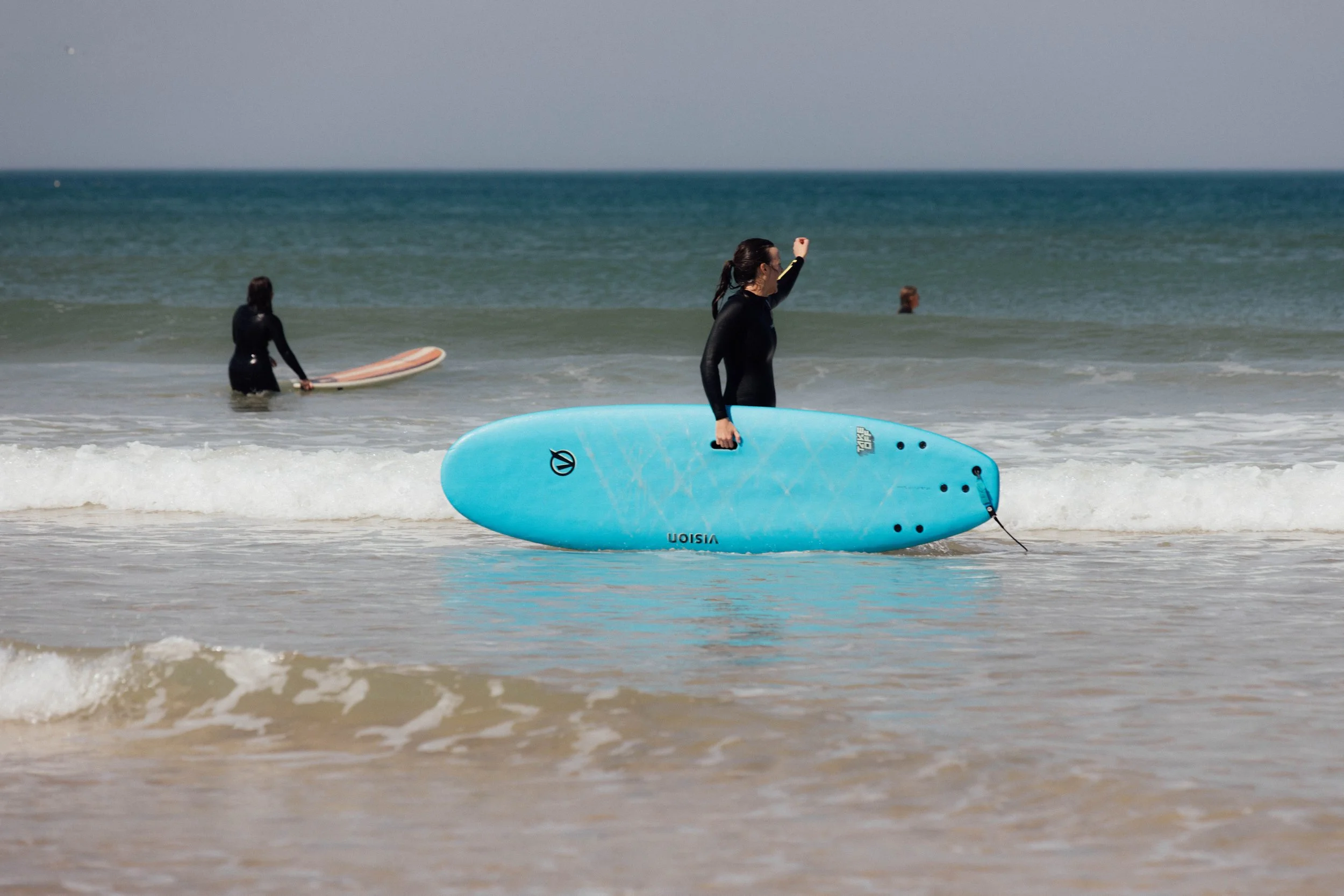
Softech Zepplin/Vision Take Off Whopper
Slightly more expensive, made with a hard plastic bottom and a lightweight soft top, these are less robust but much lighter than the Alder Glide. Still very thick and wide but the harder bottom and all round reduction in weight makes these respond quicker.
These two would be my recommendation as the best foam surfboard for adults who are just starting and want to avoid hire costs straight off the bat. Most people skip buying one of these and move on to the boards below.
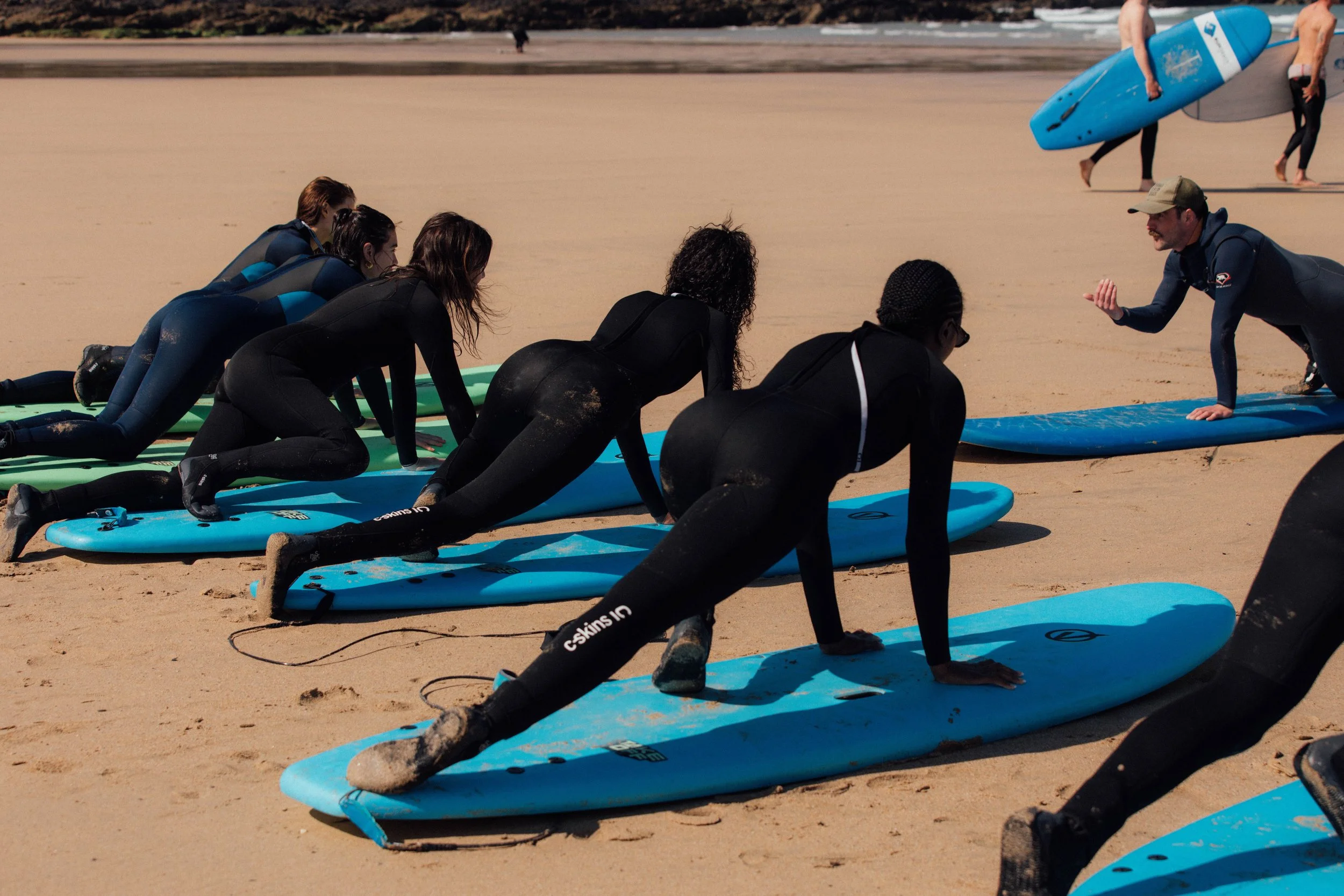
Surf School/Improver foamies - Are These Performance Foamies for Improvers?
The two main differences here are the construction and shape. All of these feature a slick hard bottom and aren’t as wide as the canal boats featured above. Good surf schools will own these and generally use them for improver lessons or lighter weight people.
Examples:
Soft tech Roller/Vision Shoot Out
Almost identical, possibly made in the same factory with slick bottoms and light weight soft tops. Featuring a lot less overall width and smaller tails, these boards will be less stable than their larger cousins but much better to turn and generate speed on small green waves.
Ideal for those making most pop ups and starting to turn in the white water, these can be pretty fun to ride on green waves up to 3ft.
The rails are still very large and boxy and the fins are flexible so although they are more inspiring to surf than the massive surf school foamies, you will always get a better ride out of a hardboard.
Other similar boards include Surfworx Banshee and Foamie The Drifter. In my experience the Soft tech and Vision mores are more hardwearing.
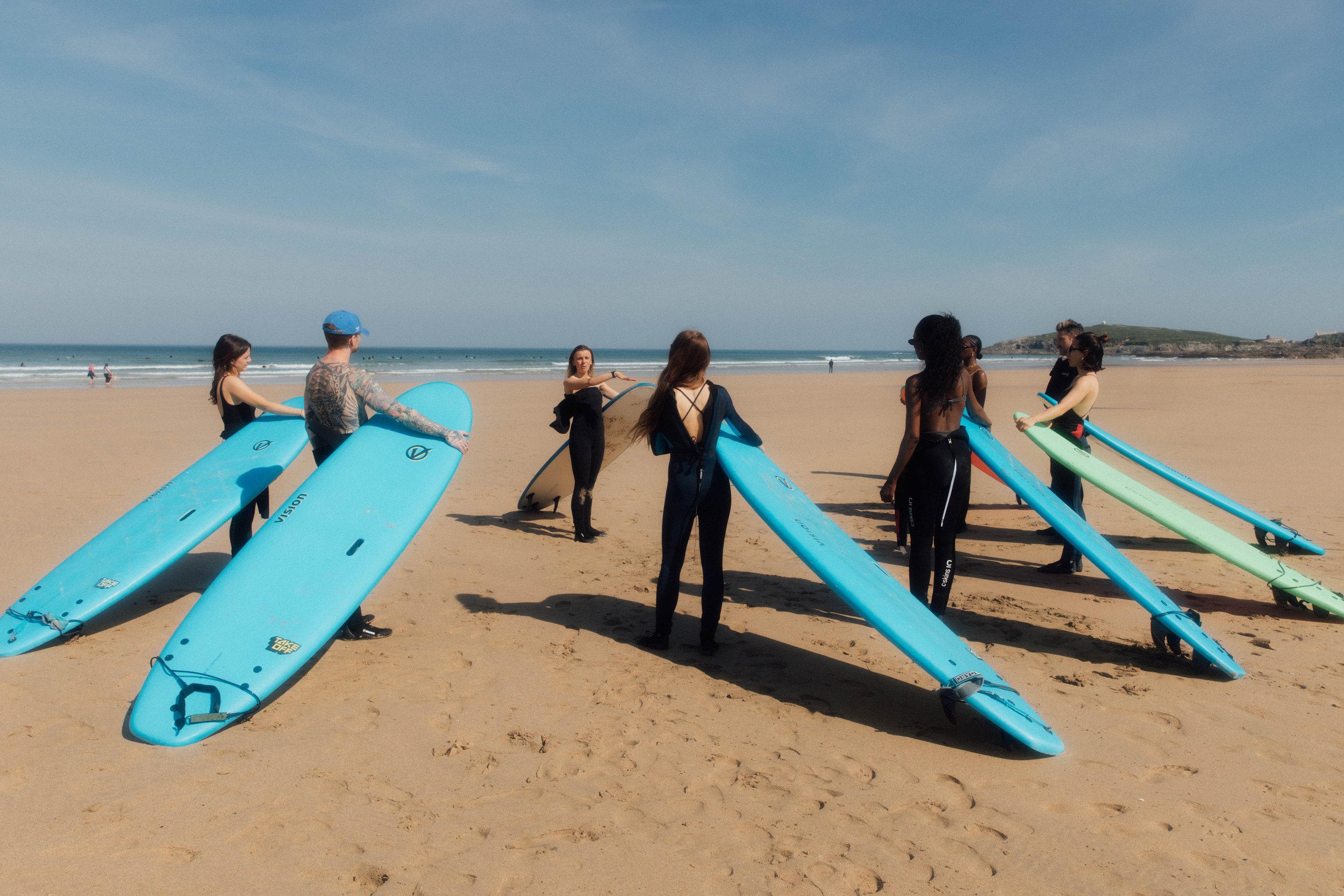
A mixture of Vision Take Off and Take Off Whopper used during our surf lessons based on Fistral Beach, Newquay
Hybrid Foam Surfboards - Hard Core, Soft Outside
Hard boards wrapped in foam, mostly with plastic fins. Sometimes called a soft top hard bottom surfboard.
I like to think of these boards as roughly shaped hardboards wrapped in a yoga mat. The bottoms are covered too, with a similar slick plastic to the above foamies.
This is designed as a best of both worlds - still soft enough to feel friendly but rigid enough to get more performance out of.
If these had better shaped rails, they would be a very close feeling to hardboards, but as talked about earlier, you can’t easily stick soft foam to round shapes so they retain a rudimentary rail shape, limiting your turns and progression.
Examples:
Ocean and Earth SSB Surf School
7’6 - 23 ½ - 3 ½ 78L
Flowt Premium Softboard
8’0 - 23 - 3 ¾ 91L
These are both secret hybrids, you wouldn’t be able to tell they are epoxy hardboards underneath a robust outer layer. More responsive to learn on but less fun for the people you run over in your learning stage.
Both of these boards have slightly stiffer fins and are much more inspiring to ride than any other learner board, they cost more but this would be my top recommendation for the best foam surfboard.
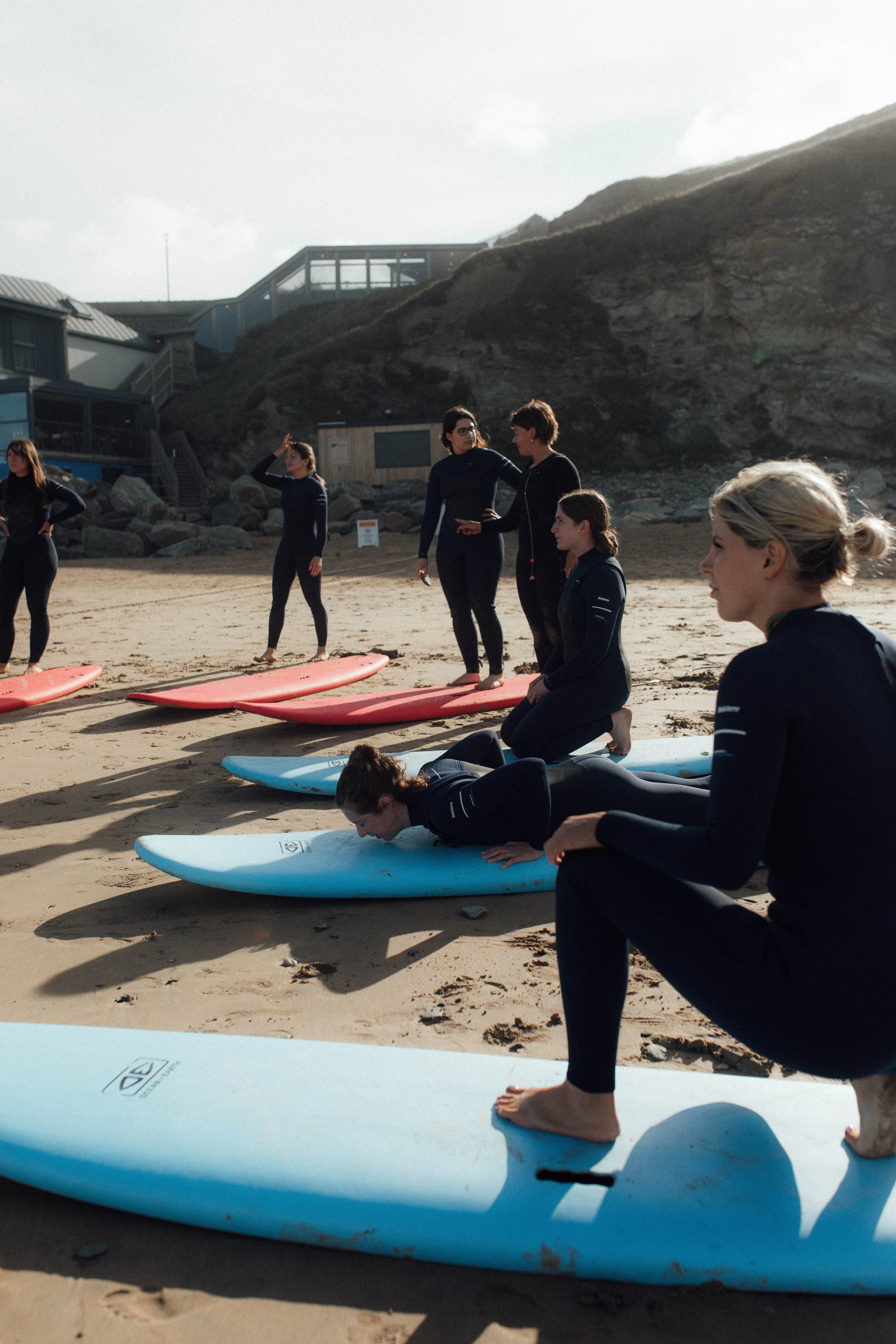
Ocean and Earth boards used during our retreat specific surf sessions at Watergate Bay
Hybrid Softboards (with fin inserts)
Same as above, epoxy hardboards covered in thin foam and plastic, but these ones have removable fins. They usually come with stiff, hard plastic fins or you can put fibreglass fins in them.
This makes a big difference from the flexible fins that will give way at any speed or when pushed into a turn.
They make good boards for those who are looking for a higher level learner board that can take a lot of abuse, also a good choice for kids who can be a bit careless with equipment.
The disadvantage, you will never get as good of a feeling in the ride as a hardboard, with the softer material absorbing the power of the wave, and the rails not able to be finely shaped.
Examples:
Ocean and Earth Happy Hour
8’0 - 22 ½ - 3 ¼ - 61.2L
A nice shape with a 2 + 1 fin system - it’s a shame it comes with basic plastic fins. In my opinion, this shape and size is too advanced for learners so at that point in your progression you might as well buy a hardboard similar to our Poached model and reap the benefits.
Softech The Middie
7’4 - 22 - 3 1/16 - 58L
A good midlength shape with the option to put FCS 2 thruster fins in. Similar story to the above, if you are looking to progress your turns with this kind of shape, the Scrambled model will provide much more glide and respond to your body movements.
Budget Foam Surfboards
Is a cheaper soft top worth it? No. Please just don’t.
They will snap at a wince of power in the wave, flex under your feet even whilst paddling and the fins will probably remain permanently bent after leaving it on the sand for five minutes.
Cheap foam surfboards and budget soft tops are widely available online and in sports shops. Inexpensive materials mean a really uninspiring ride - these boards are equivalent to the £5 body boards supermarkets sell, let's keep these out of the landfill.
Examples:
Anything from Decathlon, Vision Ignite, Osprey Action.
What Size Foam Surfboard Do I Need? - A Simple Guide
With the shapes and their limitations in mind, you may want to skip the very large beginner foamies based on your ability or size.
As general advice, for a first time foamie, don’t over complicate the sizes and always go bigger over smaller.
At a basic learner stage where you are still in the white water, the wave is moving slowly so a floaty board is going to give you the most room for error - more time on your feet equals more learning.
In terms of volume, most adult beginners benefit from at least 65–90 litres on their first foam surfboard
For average sized men, a high volume, wide 8ft is best. If you are pushing 100kg, you may want to search for a 8’6 or 9ft ensuring there is plenty of width and volume.
Shorter, lighter men/women can opt for a less wide 8ft foamie (like the Soft tech Roller/Vision Shoot Out) or go for a wider 7ft with plenty of width and thickness.
Shorter and lighter surfers will have a harder time avoiding nose dives on larger boards, needing to move around in their paddle positioning and keep their head high to lift the nose up. This is why it may feel better to surf a shorter board, where the lack in length is compensated by more width.
Some sub 7ft foamies (like the Softech Roller in a 6’6) would suit very short, light females and kids, but this would likely leave you wanting more paddle power on smaller days.
Still not sure what foamie to get?
The best way is to get in the water with a surf coach, even better one who knows a lot about surfboards. I’ve watched thousands of people surf foamies, all different shapes and sizes of people on all different boards.
Whether you're choosing your first foam surfboard, wondering whether to upgrade your foamie, or ready to make the move to your first hardboard, we can help.
Drop us a message by clicking the link below - we can get you booked in for a lesson focussed on getting the right board for you.