
Tail Pad on a Mid-Length Surfboard: Do You Actually Need One?
By Max - Hand Laid Eggs
Shaper of Mid Length Surfboards in the UK
A common question we get asked here at Hand Laid Eggs: Does my new board need a tail pad?
So whether you've just ordered a performance mid length, minimal, or fish surfboard - here's everything you need to know about surfboard traction pads, and whether one belongs on your deck.
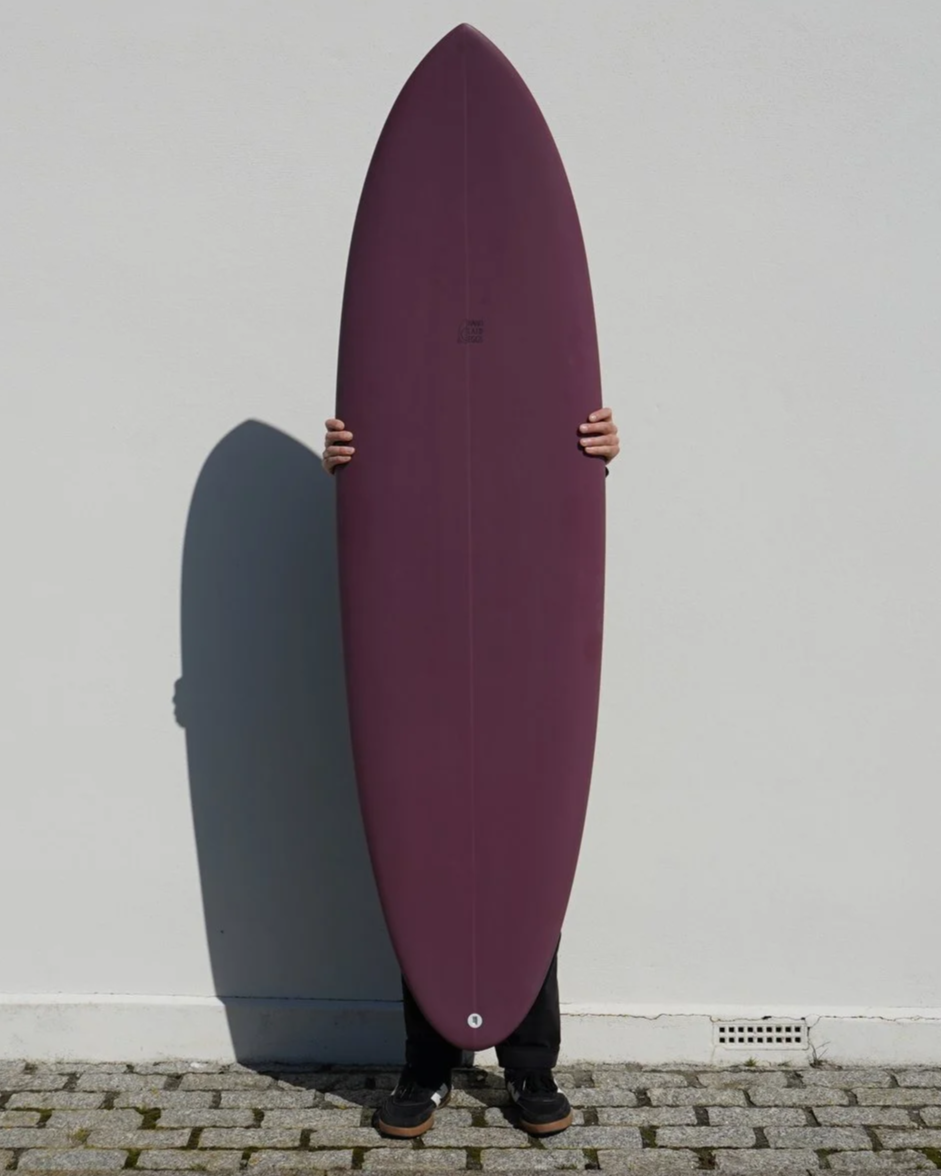
Such a beautiful hand made mid length - is it ruined by a tail pad?
What Is a Surfboard Tail Pad?
A tail pad, also called a traction pad, is a piece of adhesive lined foam that sticks to the rear section of your surfboard. It acts as an alternative to surf wax at the tail, giving your back foot something to grip. Most tail pads also feature a raised kick at the back edge, which acts as a physical stop for your foot.
Tail Pad vs Wax: What's the Difference?
Both do the same fundamental job, they stop your feet sliding on a wet board. Wax is the traditional option. Easy to apply, and used across every board type.
A traction pad offers more consistent grip, doesn't need reapplying, and has that raised kicktail for foot awareness. The trade-off is permanence, once it's on, it's on. The debate also centers around aesthetics, which we'll come to.
For most surfers on larger boards, wax is fine, with the tail pad seemingly a given on high performance short boards.
Who Actually Needs a Tail Pad?
If you're in the top 1–5% of surfers, pulling high-performance turns, snapping off the lip, landing airs - a tail pad really matters. At extreme rail angles, when your back leg is fully extended and you're driving hard off the tail, that last few millimetres of grip is the difference between holding the turn and slipping off the back.
For everyone else? You probably don't need one. But that doesn't mean they offer zero benefit to regular surfers.
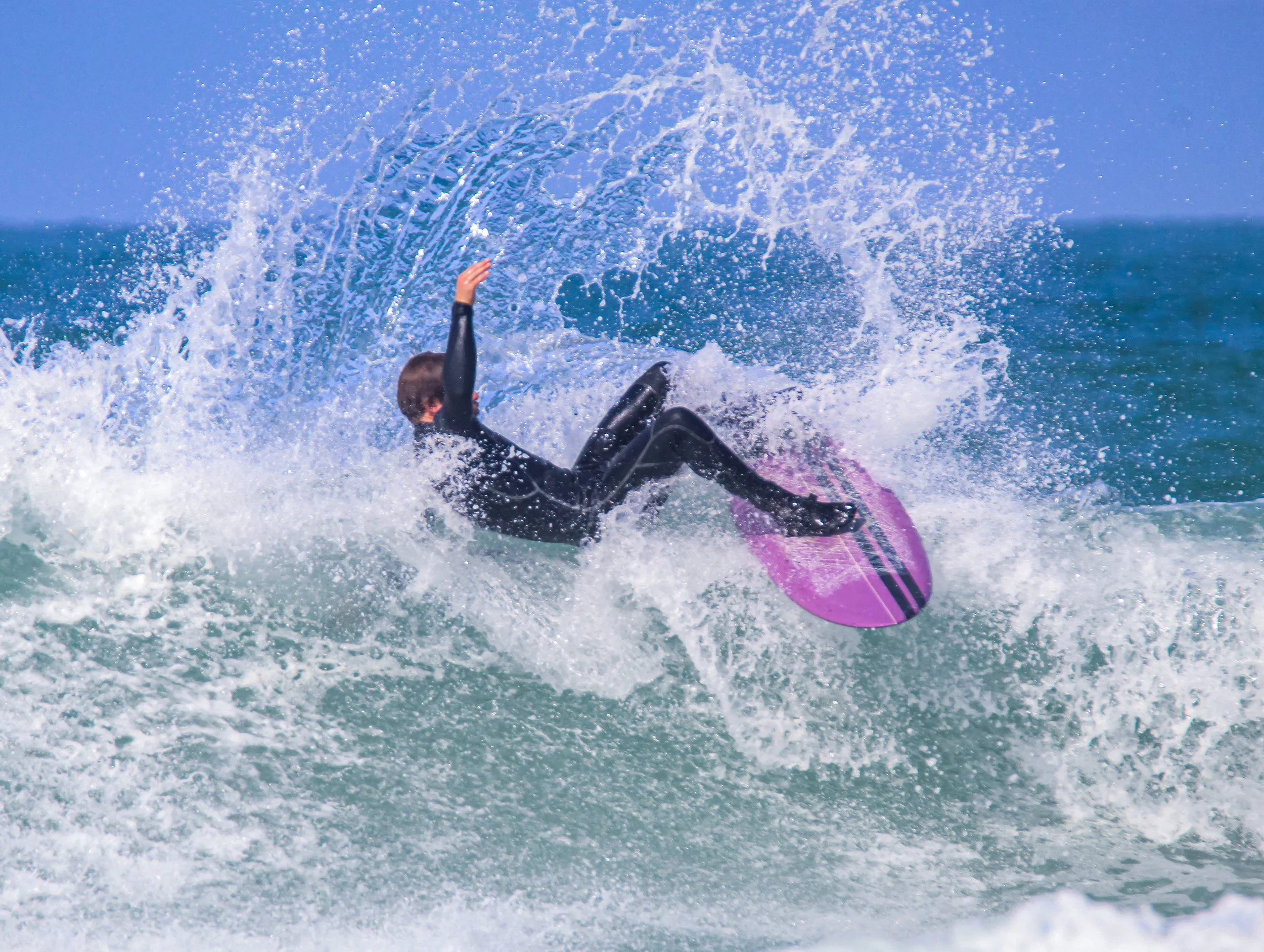
Willow Harman blowing the fins (and his knee) out, on one of our smaller twin pin models
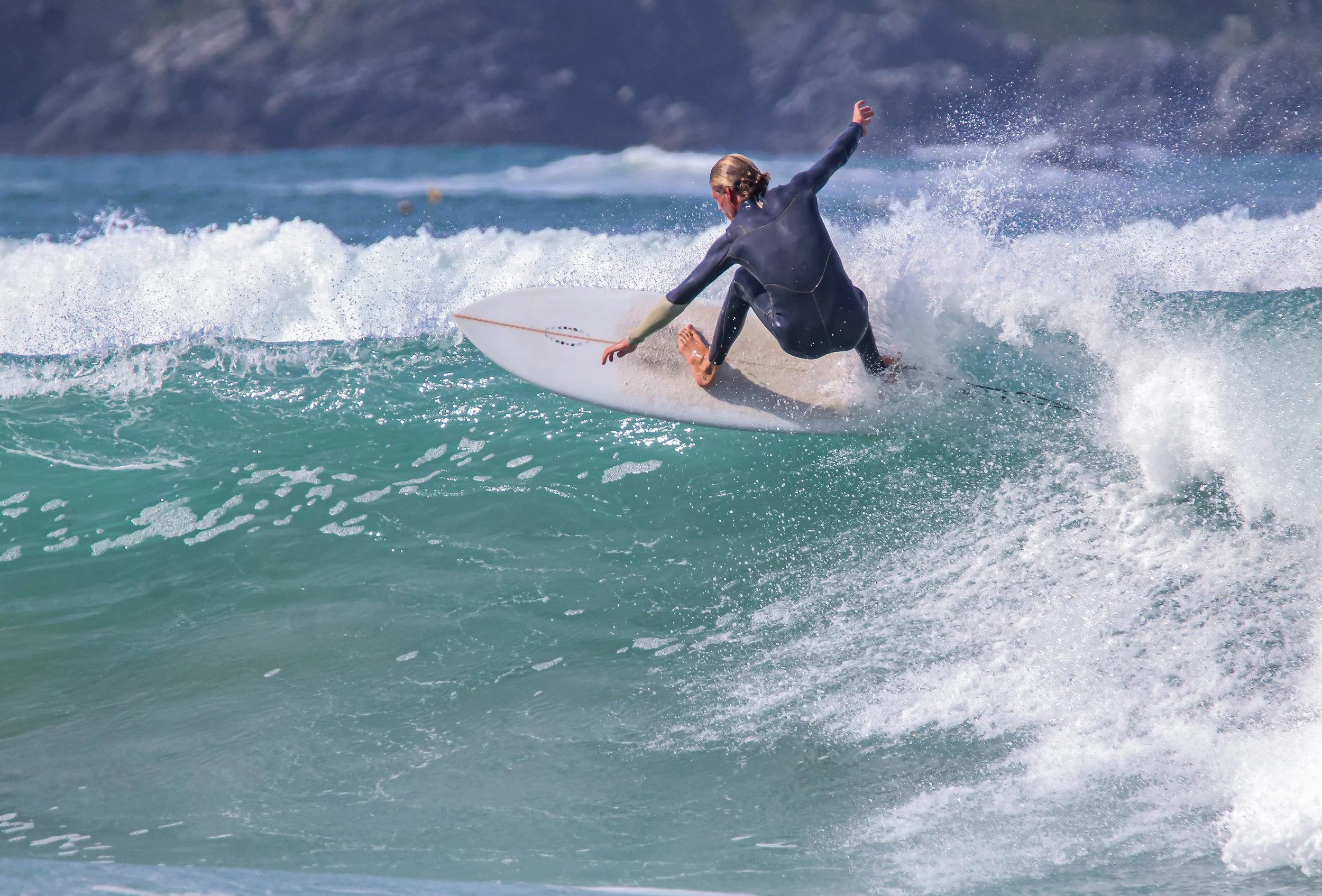
Victor on one of our performance mid lengths the ‘Royale’, proving you don’t need a tail pad to hit the lip at Tolcarne, Newquay
Benefits of a Tail Pad for Intermediate Surfers
Advantages:
Potentially to grip at critical moments like steep drops and hard turns
Instant foot placement awareness when you pop up, so long as you can feel it
Protects the deck of the tail against most pressure dings
Cushions your knee during duck dives
No need to re-wax the tail section
Disadvantages:
Permanent - difficult to remove cleanly
Affects the clean aesthetic of a waxed deck
Can feel out of place on cruisy, flow-style boards like mid length and fishes where heavy back foot turns aren’t used
One underrated benefit for intermediates is foot placement awareness. A very common problem at this level is popping up with the back foot too far forward. Too far up the board and you can’t sink the rail, generate pivot, and drive a proper turn. The raised kick and texture of a tail pad gives you an instant physical reference point every time you stand up. For us cold water surfers in the UK, you may not feel it as much in the winter months with wetsuit boots on your feet.
There's also a solid board protection argument. Pressure dings are inevitable, from your feet, knees, the occasional awkward wipeout. When you duck dive, your knee goes straight into the deck with force. A tail pad adds cushioning that can prevent compression dents forming over time, which is worth considering on a handmade board you want to keep in good shape.
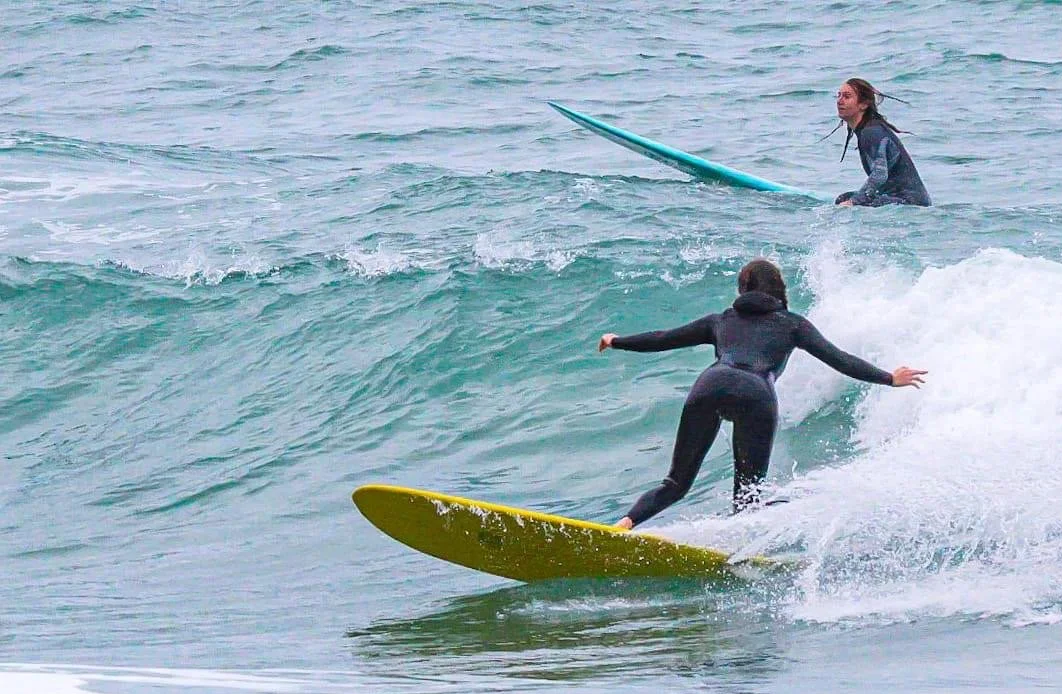
Beth on her custom shaped mid length, laying down an easy bottom turn without a tail pad
Do You Need a Tail Pad on a Mid-Length?
For most mid-length riders - no. On a board like our Scramboard or Royale, you're simply not surfing in a way that demands one. Mid lengths are designed for flow: longer, more drawn-out arcs, ridden with a more centred stance. You're not snapping violently off the back foot, and the board itself won't let you get that radical anyway.
There's also the aesthetic argument. A clean, fully waxed mid-length is a beautiful thing. For many people, sticking a foam pad on it feels like putting a spoiler on a classic car - it just doesn't belong.
I personally have never missed a tail pad on bigger boards like the Scramboard or the Royale. You can absolutely achieve a really nice turn without one - and the clean deck just looks right.
Do You Need a Tail Pad on a Fish?
Most fish riders don't use them, and for good reason. A fish is ridden more off the front foot, it's a looser, cruisy, flow-oriented board where you're drawing out your turns rather than driving hard off the tail. The performance demand simply isn't there in the same way.
The aesthetics argument is arguably even stronger on a fish. There's a fairly strong consensus in the surfing world: tail pads on fish boards are a no-no. The appeal of a fish is a pristine, waxed deck from nose to tail.
The Verdict
No board needs a tail pad to function. For shortboard surfers pushing performance limits - particularly on steep drops, hard turns, and aerial landings, they earn their place.
For midlength and fish surfers, the benefits rarely outweigh the aesthetic cost, though the foot placement awareness and board protection advantages are worth keeping in mind so long as you get the pad in the right place!
Ultimately, it comes down to how you surf, what board you're on, and what feels right. You do you.
How to Apply a Tail Pad
If you do decide to go for one, application is straightforward but permanent, so take your time.
Start with a completely clean, dry deck, any wax must be fully removed from the area first. Position the pad (most come in multiple pieces) before peeling the backing, using the stringer and rails as reference points to get it centred and straight.
We generally advise that the kicktail should sit right at the very end of the board near the leash plug but the final few millimetres are personal preference.
Once you're happy with the placement, start with the middle section of the pads first, then outers. Peel and press firmly from the centre outward, removing any air bubbles as you go. Leave it for 24 hours before getting in the water, even better if you can put some reasonably heavy items on to really stick it down.
Types of Tail Pad: A Quick Guide
Other than the below features, tail pads (aka traction pads) also come in sizes. Depending on the manufacturer (Gorilla, FCS, RAGE to name a few) the size will indicate whether it’s suitable for boards with small or large tails. Twin pins need smaller tail pads, fish and other small wave or groveller boards need larger ones - check before you buy!
Arch Bar - Features a raised arch in the centre for added foot support. Popular with performance shortboarders who want feedback through turns. Personally I make sure the arch isn’t too large otherwise it can feel uncomfortable on the feet.
Flat - No arch, A lower-profile option that suits surfers who prefer a more neutral feel underfoot…perfect for those with flat feet!
Single Piece — Simple to apply and less likely to peel at the edges. Good for smaller boards with less tail rocker variation.
Multi-Piece - More flexible and easier to position on wider or more complex tail shapes. The most common format for modern shortboards.
Frequently Asked Questions
Should beginners use a tail pad? Not something to worry about at this stage. Beginners are typically riding bigger, more stable boards where a tail pad offers little practical benefit if you’d even find yourself that far back on the board on purpose.
Where should a tail pad be positioned on a surfboard? As a rule of thumb: The kicktail should sit flush with the leash loop. The pad should be centred on the stringer, sitting far enough back that it’s over the back fin of the board or even further behind on twin fins or 2 + 1 set ups. Please note although this is open to personal preference, in order to be useful to the surfer - pads should be positioned very far back on the board, usually as far back as they can go on thruster three fin set ups.
Tail pad or wax - which is better? Neither is objectively better - it depends on your surfing. Wax is more versatile and works on any board. A tail pad offers more consistent grip, better foot awareness, and protects the deck, but is permanent and suits performance surfing more than cruisy riding.
Can you remove a tail pad without damaging the board? It's possible but tricky. Warm the pad very gently with a hairdryer to soften the adhesive, then peel slowly from one corner. Any remaining adhesive residue can be removed with a citrus-based cleaner.
Do you need a tail pad on a fish surfboard? Most fish riders don't use them, and with good reason. Fish boards are surfed off the front foot with a flowing, loose style that doesn't demand the grip a tail pad provides. The aesthetic argument against them on a fish is also strong. A clean waxed deck where you can see the beautiful shaped fish tail is part of the appeal.
What colour tail pad should I get? Purely personal. White pads are a popular choice for keeping the deck looking clean and minimal but be aware they get dirty from wetsuit boots amongst other things. Black or grey are the most common and show less wear. If aesthetics matter to you, match it to your board's colour scheme.
Thinking about your next handmade mid length, fish, or shortboard? We're based in the UK and happy to chat through what's right for your surfing. Find us on Instagram @hand_laid_eggs or visit handlaideggs.co.uk/shop