
Signs Your Surfboard Has Water Damage
Written by Max Colvin - Surfboard designer and Shaper
When you get a new surfboard, it’s beautiful, immaculate and you want it to stay that way.
Apart from some colour fading, it would stay like this, if you didn’t surf it.
But not just surf it… if you didn’t take it in and out of the bag, through your house/garage, into your car, out your car, onto the pavement, down the steps, around the concrete walled corner and finally into the surf where there’s multiple other people around you with hard craft.
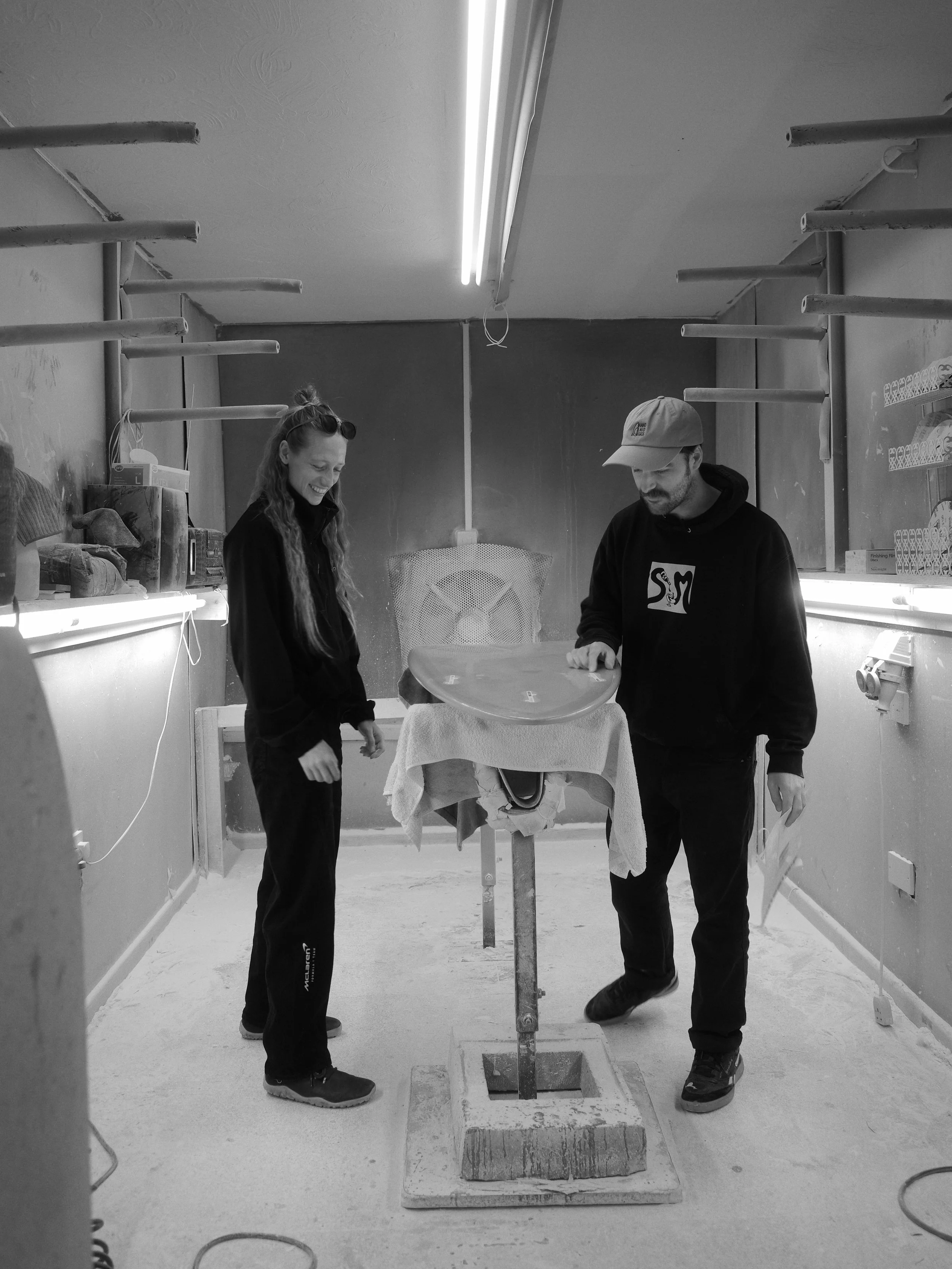
Surfboards are meant for surfing, as beautiful as they can be, they won’t stay new forever.
How a board is laminated (aka fibreglassed)
To better understand if or how your board might be damaged, it’s important to understand how they are made.
After the foam is shaped and smoothed down to a fine surface, the boards are laminated with multiple layers of fibreglass and filled with sanding resin.
The lamination process ensures the shape is strong and watertight against normal use.
The bottom of a board is done first, lapping over the rails. The top is done in the same way with one layer of fibreglass, but in addition, a lighter deck patch is put underneath the wrapping layer.
The fibreglass is cut out, laid down then resin is mixed and ‘worked’ into the fibreglass sticking it to the foam before it eventually goes ‘off’ which makes the rigid and water tight structure.
The laminated board is then filled with resin, rough sanded flat, then filled again and lightly sanded (think polished) to get a smooth finish. Fin and leash plug inserts are routed in, in between these stages.
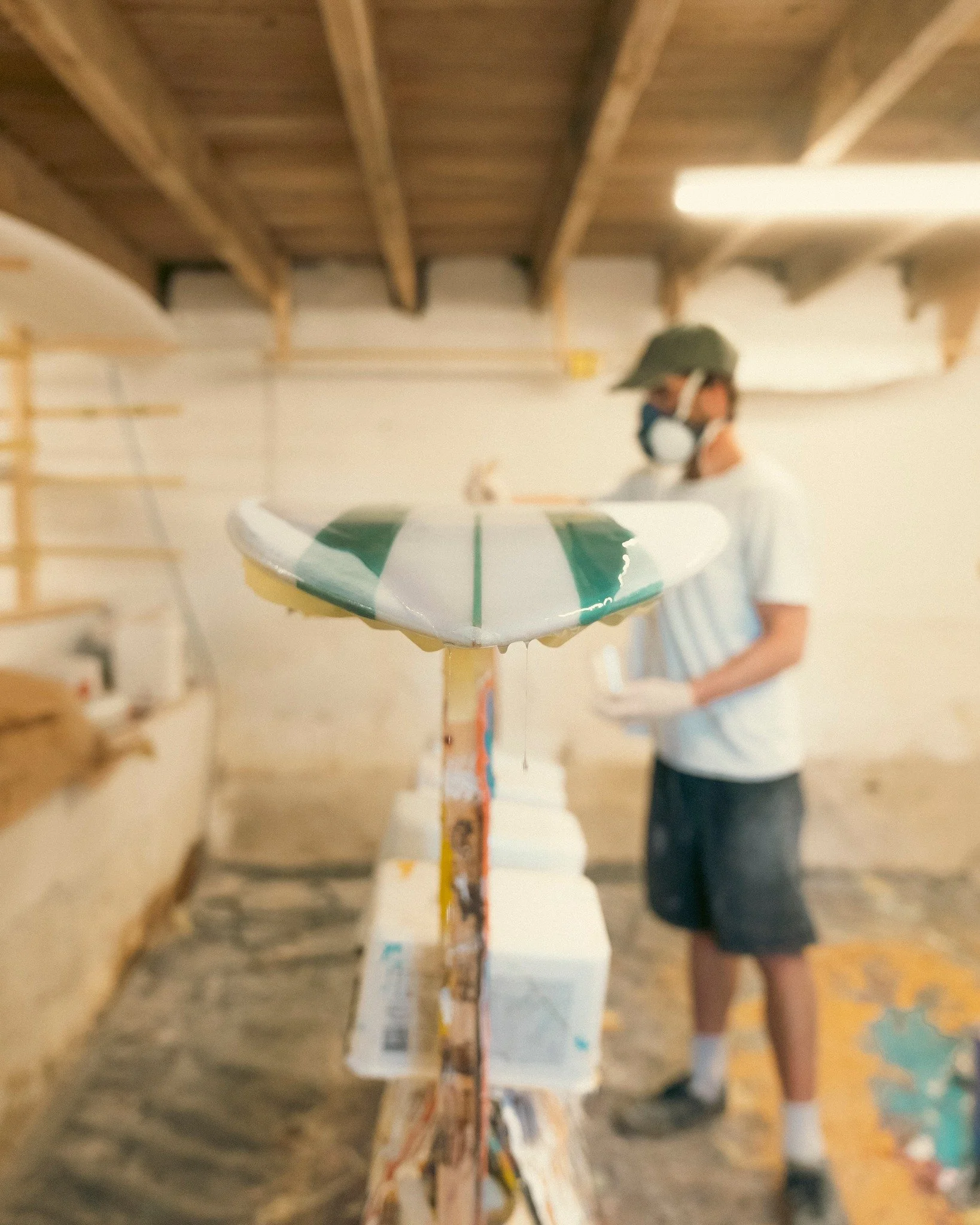
The colour is either spray painted onto the foam before a clear/non pigmented lamination, or colour pigment is added to the resin which goes on the fibreglass and through to the foam.
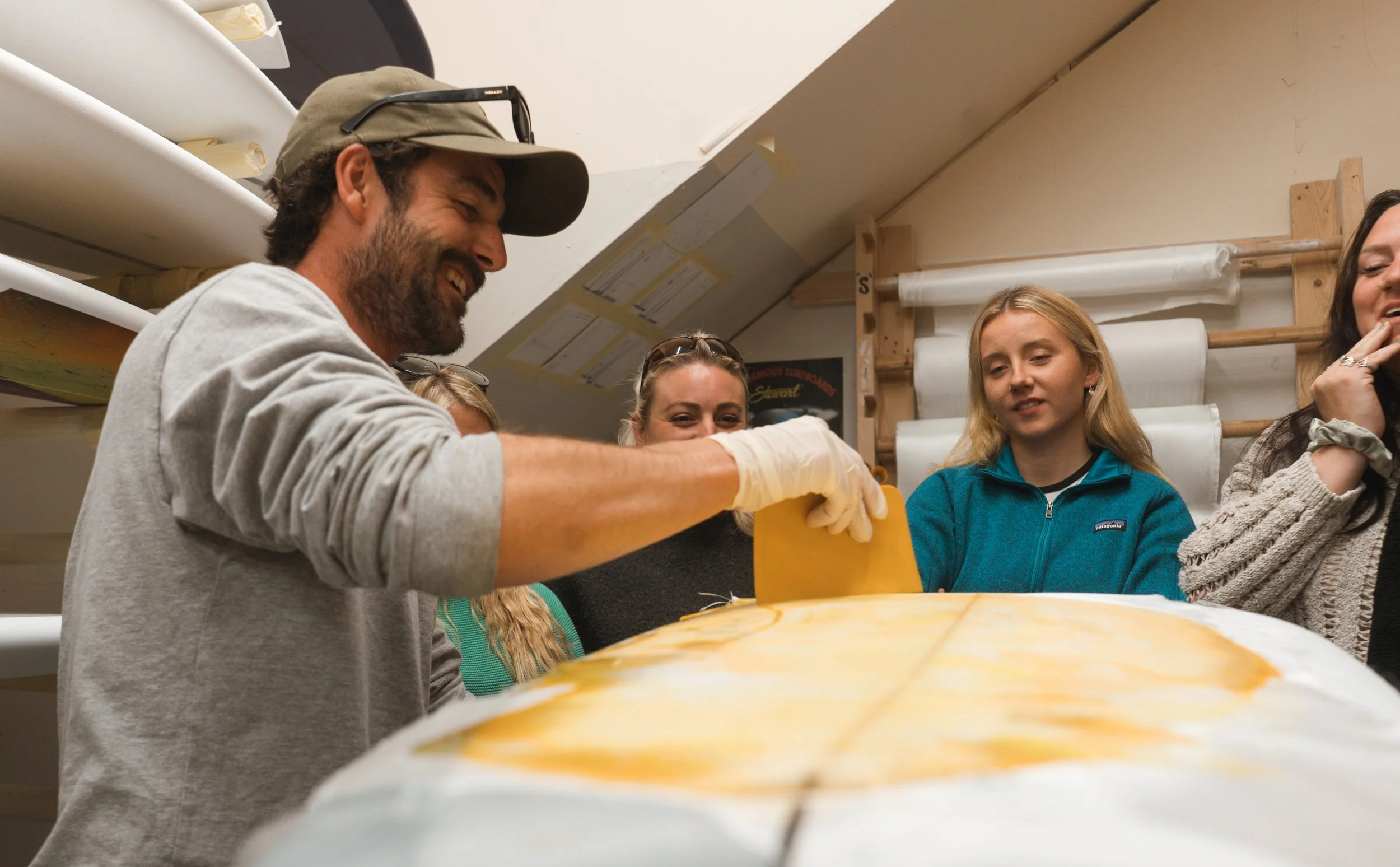
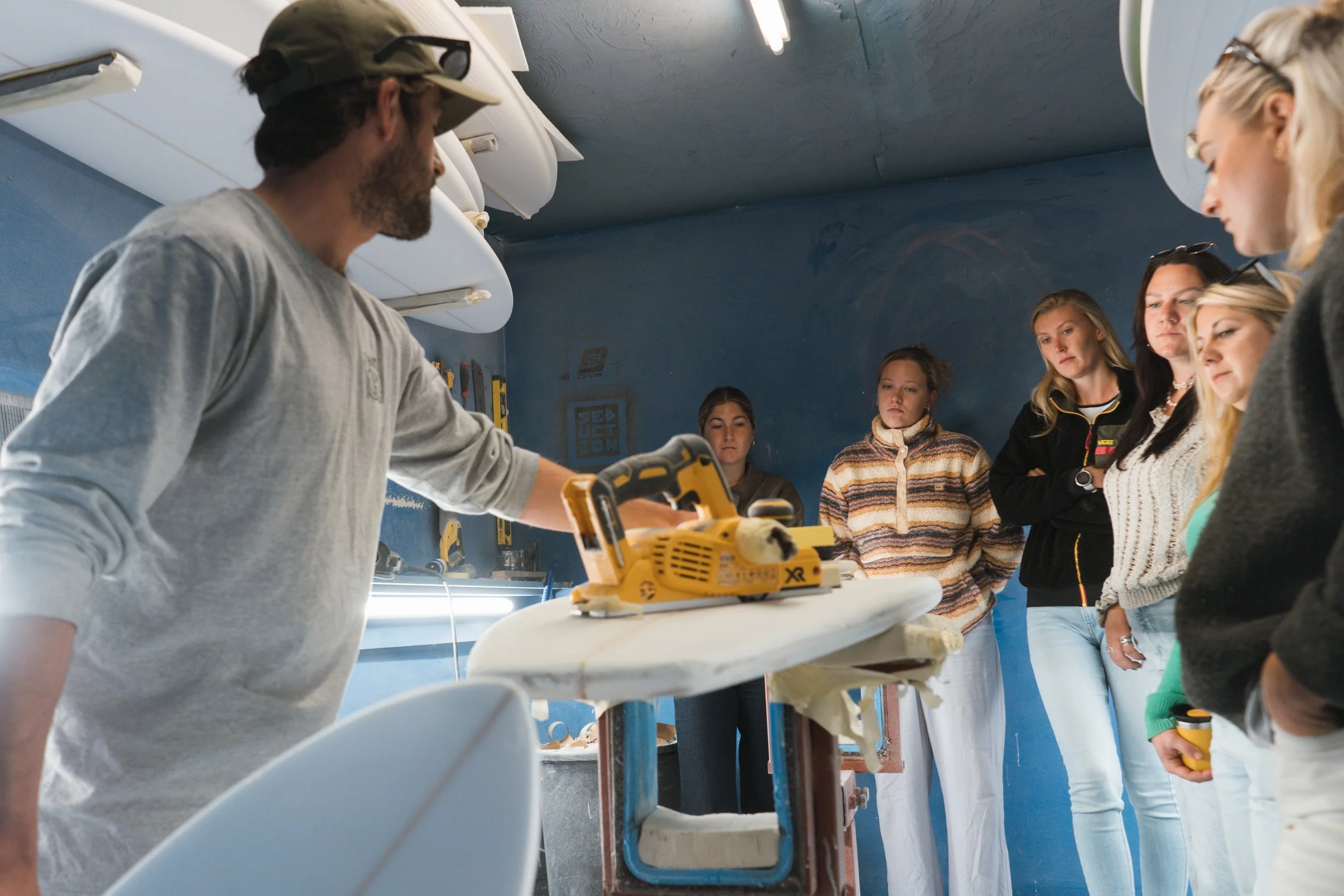
Our shaper shows female led surf group Sisters of Stoke how colour is added to surfboards during a tour of Hand Laid Eggs workshop
What about EPS/Epoxy?
The other foam material, EPS (Expanded Polystyrene) and Epoxy resin are hand made in the same way as above.
Boards from the brands like Torq and NSP aren’t hand made in the way described above but they are also EPS and Epoxy resin. These boards are mostly made by machines in factories, in a type of mould/sandwich construction process.
How do I know what material my board is?
It should be written online, on the board, or ask your shaper. Note that PU foam can be repaired with either resin, EPS foam cores can only be repaired with Epoxy resin.
Remember this -
White foam core, two layers of fibreglass lap over each other on the rails, one extra patch on the deck, filler resin in between creating a ‘glossy coat’ on top.
Colours are either directly on the foam, or in the fibreglass layers just touching the foam.
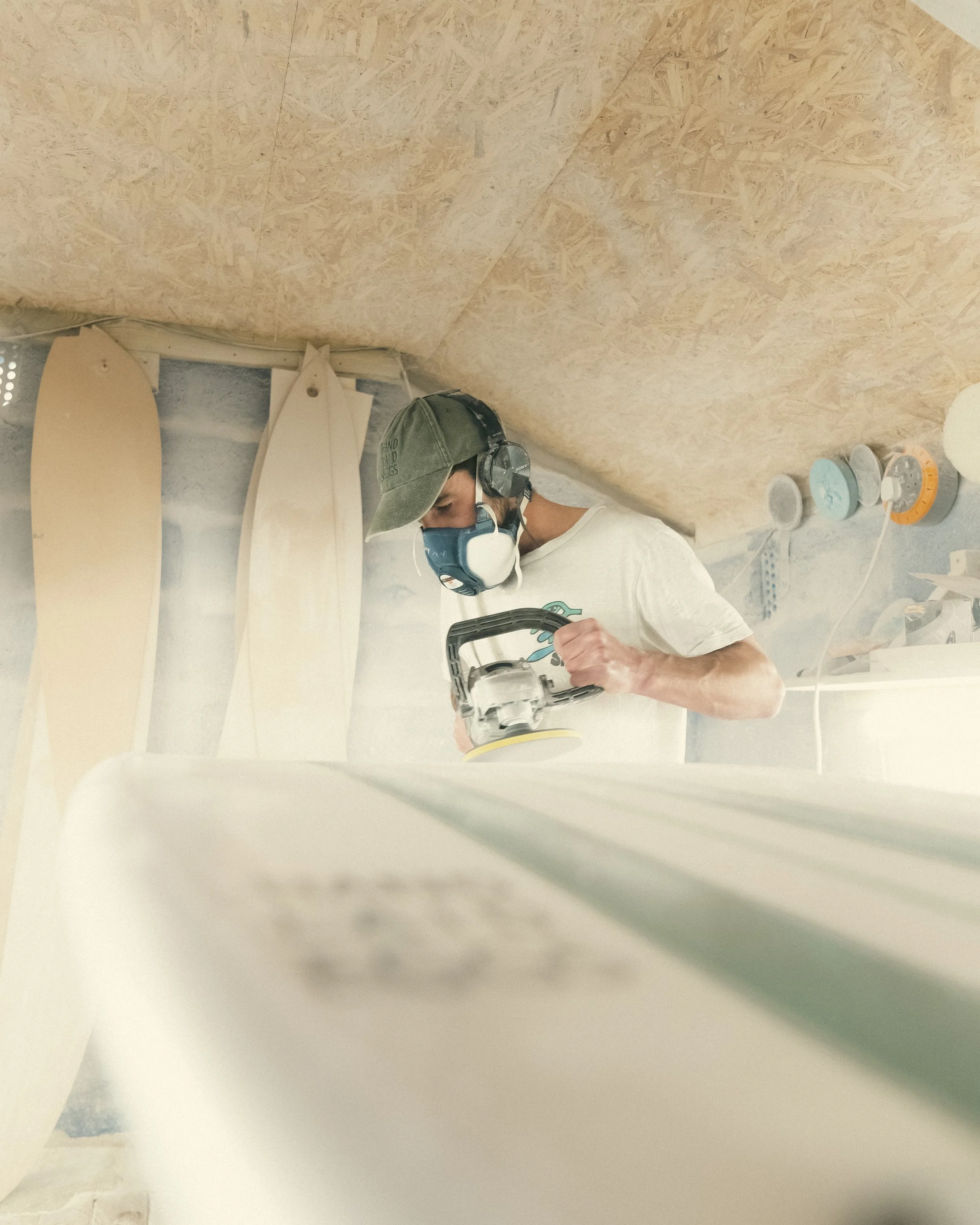
Okay I think I get it - how do I know if my board is damaged?
Your board needs repairing if there is…
A hair line/zig zag looking crack that is raised, sharp or soft when you push on it with your thumb.
There may be salt marks coming out, or it’s still wet to touch after the board has been left inside to dry.
How did it happen?
The board has suffered an impact usually from a hard edge: Your car door/boot, the steps on the way to the surf, other surfboards rails in the water (you may not even notice this) or even an impact through the padded bag.
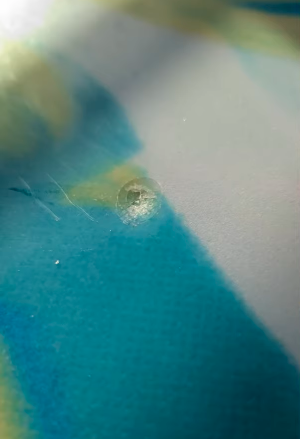
Pin hole/dent with cracking
Similar to the above but has a dent before there is any cracking. Again check if it’s soft or you can see through to the fibreglass weaves/foam.
How did it happen?
Chances are it was put on a small or sharp stone on the concrete you didn’t notice. Sometimes a puncture through to the fibreglass won’t be soft but will be letting in water. Very easy to repair with just a drop of resin.
Soft areas or obvious air bubbles where the fibreglass layers have come apart from the foam - this is called delamination
How did it happen?
Either large impact, falling hard on the board etc or…
Leaving the board in a hot car or in direct sun will cause delamination, which is the layers of resin separating from each other or the foam.
Boards that have been repaired or made badly may have air stuck in them that will heat up and expand, making larger patches of air bubbles. Small areas of delamination aren’t the end of the world, but as soon as the separated layers start cracking, water will be let in.
Discolouring, yellowing if it’s a white/clear board
Water has been let in somehow, it could be one of the above, potentially if you have a coloured board you may not notice damage until it’s let in water.
Yellowing also happens slowly from the sun, this doesn’t need repairing but isn’t appealing so don’t leave your board inside by a window.
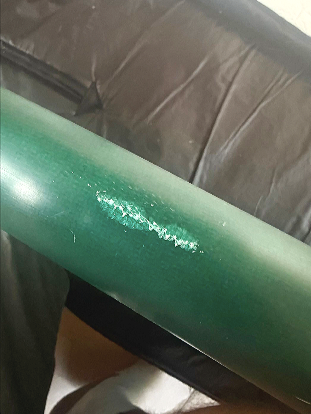
Superficial damage - this doesn’t need repairing, but monitor it
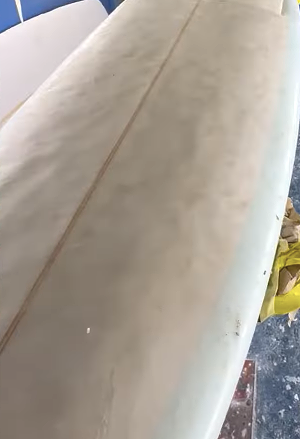
Pressure/compression dents that are still firm and smooth to touch. There may be some cracking in the gloss coat but no zig zag fractures.
How has it happened?
Part of normal use and is to be expected even from the first surf. Your board is something you jump, fall and poke your knobbly knees and heels into.
Pressure dents are usually found around the front and back foot’s heel area, where your knees would duck dive or potentially where you might drag your knee to pop up.
They are more easily made on the bottom of the board due to the single layer of fibreglass - don’t stand on the bottom!
Small cracks in the gloss coat or small separation of fibreglass layers but the board is still smooth to touch, isn’t soft or cracks further when pushed with a thumb.
Only the top layer of fibreglass and the gloss coat are damaged, so the board is still water tight.
How has it happened?
Small impact usually from a hard edge or object has caused these, otherwise they’d look more like a pressure dent. Usually found on the rail where there is less ability for the fibreglass to flex so it shatters instead.
Depending how your board was coloured, these may seem more obvious. Clear boards you may not notice, dark coloured boards will be the most obvious, especially if it’s sprayed on the foam.
The fibreglass layers can separate a little bit (creating the shattered look) but still be watertight and retain their strength.
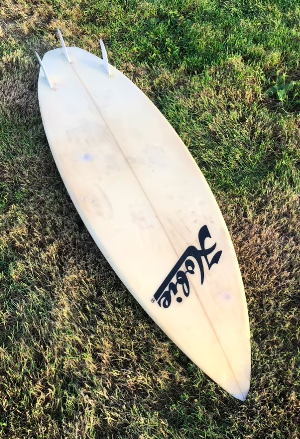
Scratches, small lines or big ones almost like something has keyed your board. Apply the same theories as above, as long as it’s not soft or cracking, it’s good.
How has it happened?
Sharp rocks, stone in the grass, sand in your board bag, the fin of the other board that was in the car…
Okay my board is damaged 🙁
Sad times, but it happens. The first one always seems the worse, then they get easier. Call them battle scars if you want, it shows your experience and connection with the board and mother ocean.
Can I surf it?
No. The more water you let in the more the board will get damaged and need to come out in the repair process.
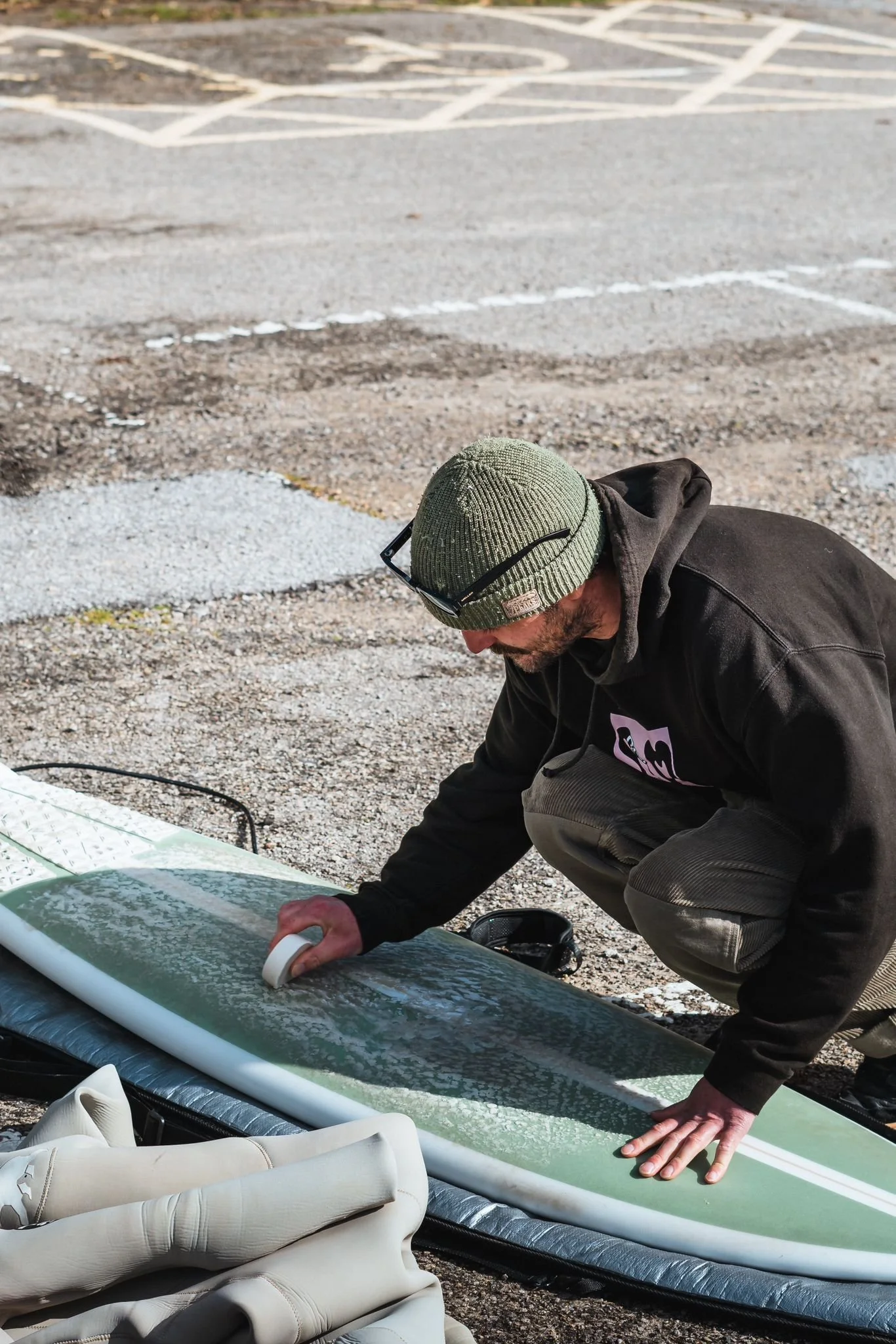
PLEASE don’t ‘plug’ damaged surfboards with wax. When it does come to be repaired all of the wax has to come out and it usually means more of the board gets stuck and has to come out with it. It clogs up sand paper and will annoy the repairer, also it’s questionable whether it even stops water getting in.
IF YOU MUST surf the board, and it’s just a small crack that was done out of the water, put good quality duck tape over the area. If it was done in the water, leave the board covered from the shade in a warm place for as long as possible. Any water stuck in will only get worse so only do this if you are on a trip and desperate.
Preparing a board for repair
If you can allow your board to dry properly before it goes to be repaired this will save time. Any loose bits of fibreglass that can be picked off then do this and bin them. Dewax your board and leave it somewhere warm, not in direct hot sun. Taking the wax off allows the repairer to see if there's any more damage you haven’t noticed, but more importantly allows the board to be repaired easily without wax getting all over a workshop. Most repairs will kick up a lot of dust, which sticks to the wax leaving the board slippy when surfed, so you will need to rewax the board after anyway.
To sum up
New boards don’t stay new forever, with normal surfing use they will feel great for many years to come. Stay on top of checking for damage and get your board repaired as soon as possible.
The majority of damage to surfboards is done out of the water. Be aware of your surroundings, keep your board in a padded bag and don’t stack things on top of it, watch out for sharp corners, don’t leave it in hot places.
In the water, learn to predict other people's movements and stay away from those out of control. Paddle fast away from people coming towards you, watch who is side by side to you when paddling out or for a wave.
Happy Surfing!
Yes we do repairs.
If you aren’t sure if your board is broken and are in the Newquay/North Cornwall area then send us a photo via the contact form on here, instagram or facebook. We can let you know and price up a repair quote worse comes to worse.
Frequently Asked Questions
How do I know if my surfboard has water damage?
Look for yellowing or discolouration on a white board, damp patches that don't dry out after leaving the board inside, or salt marks around a crack. Any of these suggest water has got in and the board needs repairing.
Can I surf my board if it has a small crack?
No - even a small crack that's letting in water will get progressively worse with each surf. Get it repaired as soon as possible. If you're on a trip and must surf, cover a dry crack with duck tape as a short-term measure only.
What's the difference between a pressure ding and real damage?
A pressure ding is firm and smooth to the touch - it's cosmetic and part of normal surfing. Real damage feels soft when pressed with a thumb, may have zig-zag fractures, or shows visible fibreglass weave or foam. If in doubt, press with your thumb: soft means it needs repairing.
Can EPS boards be repaired the same way as PU boards?
No. PU foam can be repaired with either Polyester or Epoxy resin, but EPS foam can only be repaired with Epoxy resin. Using the wrong resin on an EPS board will melt the foam. Always check what your board is made from before attempting a repair.
Do you do surfboard repairs in Cornwall?
Yes we're based in Newquay and carry out most small repairs across North Cornwall. Send us a message via the contact form on our website, Instagram, or Facebook and we'll let you know what's needed and provide a quote.
How should I store my surfboard to avoid damage?
Keep it in a padded board bag, away from direct sunlight and heat. Never leave it in a hot car. Store it somewhere it won't be knocked, and don't stack anything on top of it.